A Super Life
We tag along with the super responsible for keeping venerable Palos Verdes GC beautiful, playable and sustainable.
The unsung heroes of any golf course are the nearly invisible folks who mow fairways, water greens, tend bunkers, eradicate weeds, cut cups and maintain all the equipment that performs all these tasks. But let’s also hear it for another nearly invisible individual: the one who makes all of this, and much more, happen — the golf course superintendent.
Unlike the affable pro who greets you in the shop and doles out slice-correcting tips, this guy or gal is in the shop yard at oh-darkthirty to meet with their team and send them off in every which direction to perform all the tasks that make a golf course beautiful and playable.
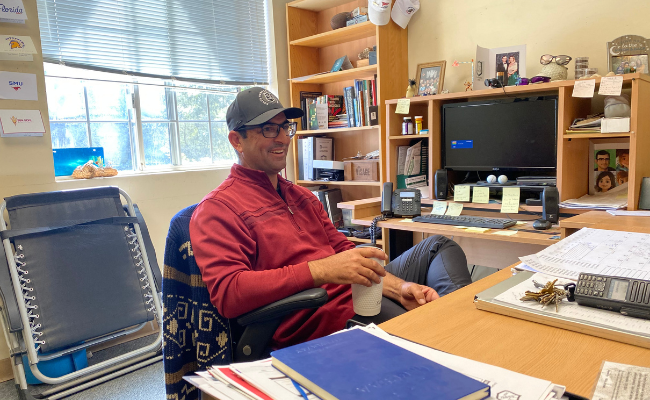
In the case of Steve Manriquez, super at Palos Verdes GC in Palos Verdes Estates, that daily meeting is at 0530, when he holds court — entirely in Spanish, by the way — with his team of 26, and a half hour later disperses them to tend, mow, spray, water or wrench.
No two days are alike for Manriquez, but one recent day found him, post–team meeting, on the putting green, where, like any smart golfer, he’s gauging the speed of the greens for the day. Not, of course, with a putter, but with a Stimpmeter. (If you’ve never seen one in action, well, you need to get out a little earlier.) We’re at 10.5 today, just on the fast side of friendly, and right at PVGC’s sweet spot.
Then it’s time to survey the territory, and what gorgeous territory it is: a rolling 6,480 yards that stretch verdantly down toward an azure coast, laced with wild gullies known as barrancas and lined with majestic coast live oak trees. “This is the best part of my day,” says Manriquez. “Just driving around looking at everything, checking in on my guys, whatever job they’re doing.”

Now, a normal golfer’s attention would be on the intense beauty of the course. But Manriquez is not a normal golfer. Sure, he’s aware of the rolling Kikuyu fairways and the bentgrass/Poa annua greens. But when he gazes across the turf, he’s drawn to the surrounds — the barrancas, the rough and beyond — and expresses a devotion to restoring them with natives and eradicating the invaders.
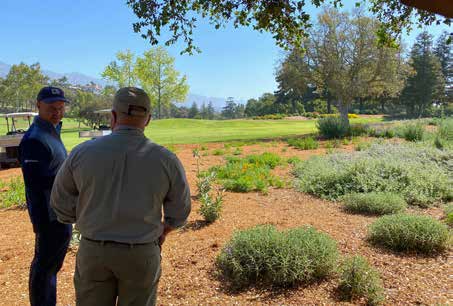
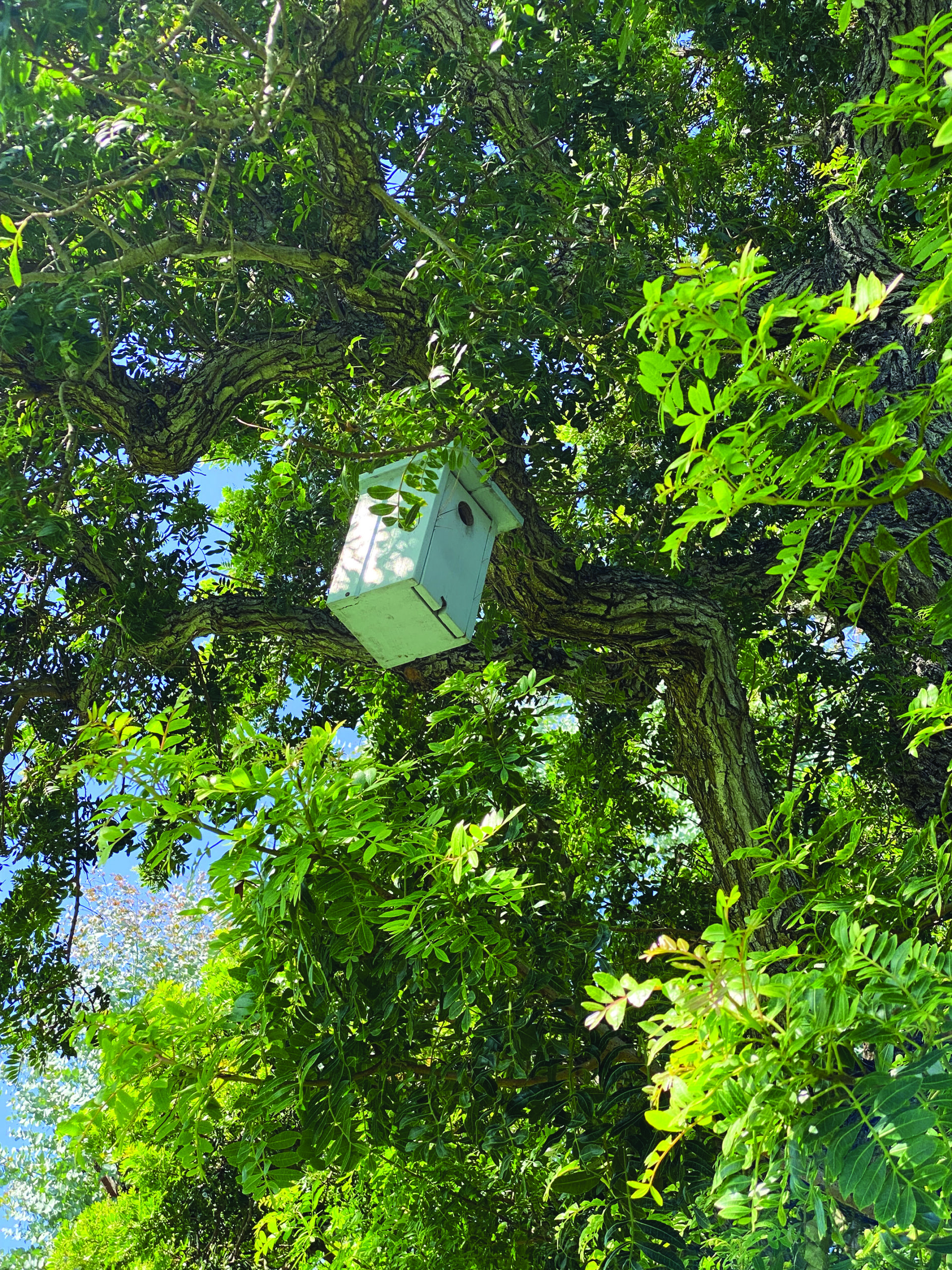
Replacing the invasive stuff with coastal sage, sunflower bush, butterfly bush, lemonade berry and buckwheat not only saves precious water, but to Manriquez, just feels like the right thing to do. Case in point is a restoration project behind the No. 5 green, where 25-foot-tall acacias used to obscure the view across the No. 13 fairway. “You couldn’t see any grass. We pulled out the bad stuff, planted natives like coastal sage and added some bougainvillea for color. Now you’ve got a line of sight to another hole.” Manriquez not only assigns crew almost daily to yank out nonnatives by hand, but he also sometimes gets in there to do it himself. “Instant gratification,” he says. In that sense, Manriquez is much like most golf course supers today. He’s aware that his course is part of nature, not an island apart from it. He does what he can to save water — fairway irrigation is 100 percent reclaimed water, pumped in from El Segundo, stored in the course ponds and carefully monitored by a centralized computer system. He minimizes spraying, having reduced herbicides by 25 percent. Bluebird boxes in the oaks house nesting western bluebirds. Solar panels power the maintenance shop, and new panels above parking lots and the driving range tees will soon power the pumphouse and clubhouse.
Also like most supers, playdays are rare. He loves golf, of course — captained his Whittier High team, attained a 2 handicap — but he accepts his lot in life. “I have one round in this year. Two last year.” He looks forward to GCSAA meetings, when he and his peers can actually sneak off for a round of golf.
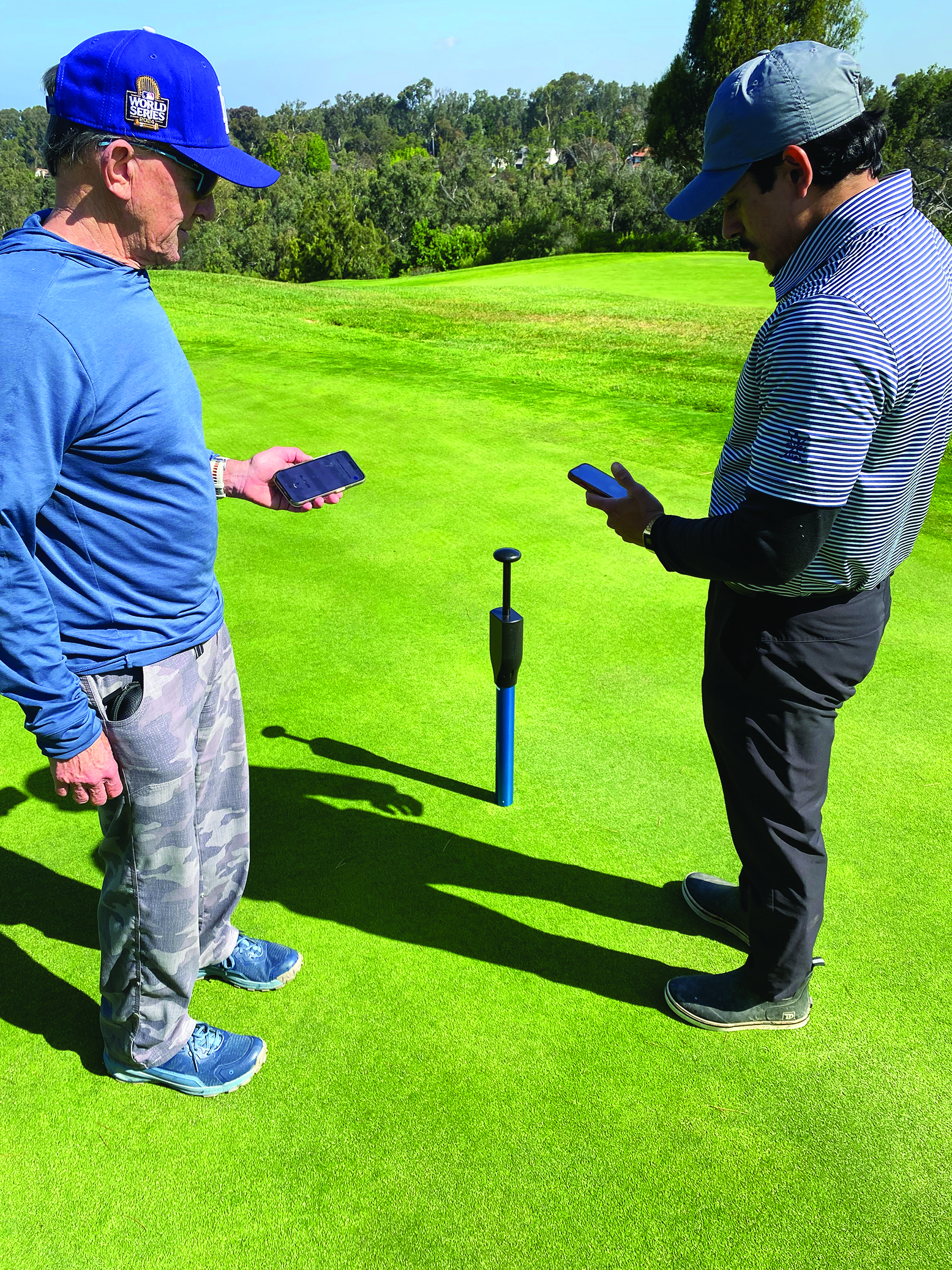
Manriquez’s satisfaction comes from wielding his moisture-reading POGO probe, feeding the resulting data into his computer system, and irrigating accordingly to maintain his 90 acres of turf. And what does success look like? “The golf course looks green and the players are happy.”
But then he can’t resist adding, “Well, that and my equipment isn’t breaking down and we’re running smooth and we’re staying ahead of issues. That’s success.”