Robots on the Golf Course
If you grew up with Star Wars and its iconic R2-D2 robot, the future is now.
The golfer at San Diego’s Rancho Bernardo Inn did a double take. As he prepared to hit a shot from the rough on the 10th hole, a small machine, no bigger than a toaster oven, slowly and silently approached. Seeming both fascinated and bemused, the young man pulled out his cell phone to snap a photo. He would be smart to hold onto that picture; it will be evidence of the early stages in a revolution in golf.
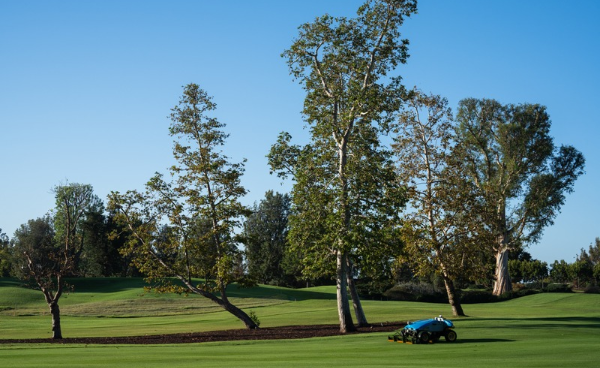
If you haven’t seen a robotic mower trimming the grass at your local course, it likely won’t be long before you do. Golf facilities around the country, with Southern California being among the hottest markets, are beginning to see the machines — they come in various shapes and sizes — as a safer, cleaner and more cost-efficient way to maintain their properties.
Among the most bullish adopters has been JC Resorts, which manages 21 golf courses in Southern California, including the Rancho Bernardo Inn, and has put robots to use on five of its properties. JC buys its machines from Kress, one of the leaders in what the industry refers to as “autonomous” mowing equipment. Other industry players include Husqvarna, probably best known for its motorcycles, and longtime mowing giant Toro.
Over the years at industry shows, John McNair, PGA, the CEO of JC Resorts, saw various iterations of robot mowers, but they either didn’t produce the results he was looking for, or the return on investment wasn’t attractive.
That changed in the last couple of years, when companies such as Kress began producing mowers that were sleek, quiet and penciled out financially for the work they accomplished. The appeal, McNair said, has been the ability to get large areas of grass mowed 24 hours a day, with no noise, only tiny clippings and the opportunity for maintenance crews to get out in front of golfers every morning, rather than players constantly chasing the noise and mess the big mowers produce.
“It’s a win-win from both sides of it,” McNair said.
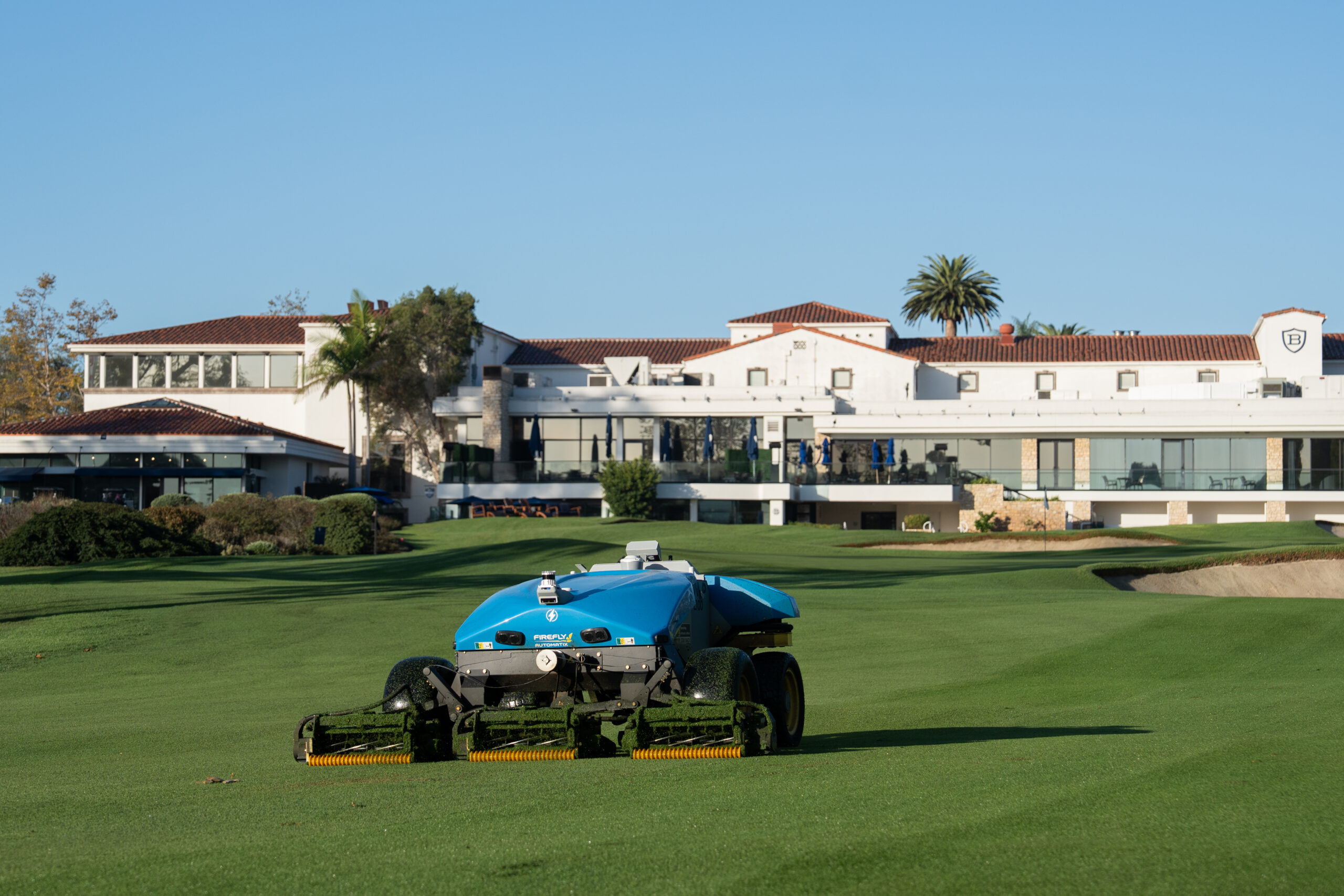
The Kress mowers work like this: A superintendent maps an electronic fence and inputs that data for the mower to follow with the aid of local cell towers. The machine moves back and forth to cover its territory, and when the battery is running low, it returns to the charging station, and, rather impressively, recharges itself. If the mower happens to be approaching golfers, it recognizes them as obstacles and stops.
Turn over a mower and the machinery is surprisingly simple — two rotors with three small and very sharp blades that turn at 4,000 rpm.
What makes the robots especially appealing is that they trim their assigned grass so often that the blade cuttings are almost non-existent, giving golfers both a cleaner lie and a nice aesthetic.
“They also don’t call in sick,” joked Jon Christenson, JC Resorts’ director of golf maintenance.
Most of JC Resorts’ mowers — a 14-inch-wide model, KR237, that weighs 47 pounds and costs $15,000 — can do about three acres (or about four football fields) in a full day. Kress already has advanced on that mower with the KR238, a 24-inch-wide machine that weighs a hefty 218 pounds and covers 10 acres. Price tag: $44,000.
“It’s that big of a leap not only in technology but mowing capacity,” said Kress’s western sales rep, Tim Berrier. “Now, what’s being done is changing the entire culture of the industry, where you’ve got human beings on these big production mowers burning fuel, making noise and getting injured just to keep the grass the same height. It doesn’t make sense when you’ve got this type of technology.”
The equations are starting to make more agronomic and financial sense to course operators and superintendents. More than 400 facilities in America have converted to the Kress robots alone, Berrier said, with about 25 of those in Southern California.
The technology is only going to get better, and those in the business can foresee a time when robots will maintain bunkers and just about everything else, with greens being the last frontier in terms of trusting them to get it right.
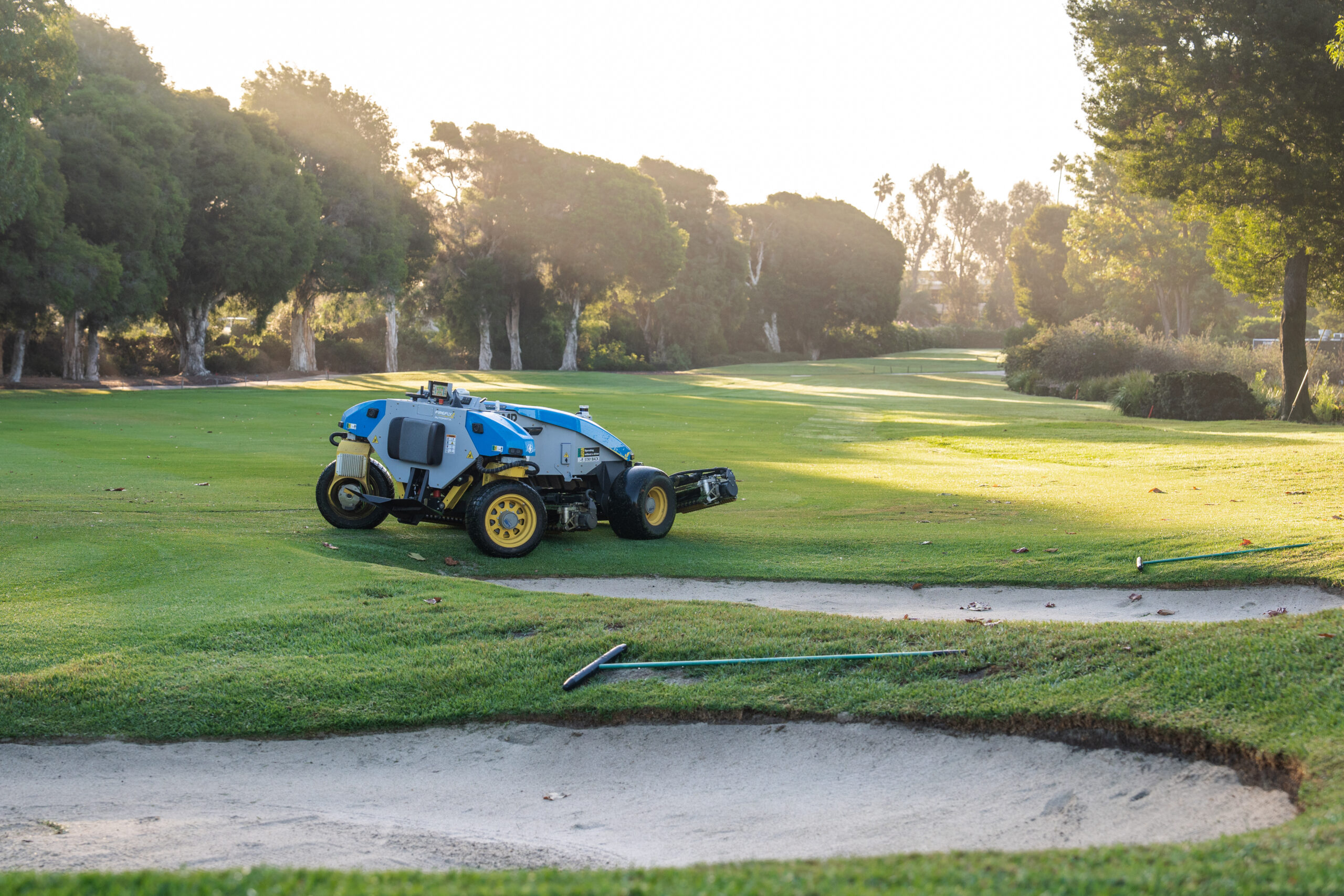
Some traditional golfers might be wary of the technology, but the robots are here to stay, and there are courses making them a part of the family. Some get dog houses for their charging station and acquire pet names.
At the private Santaluz Club in San Diego, members decorate the robots around the holidays with “Elf on a Shelf” figures that serve as jockeys, through rain, shine and sprinkler dousings.
“The elves just get destroyed by the irrigation,” Berrier said, laughing. “It’s hilarious.”