Newsom Signs Golf Bill Aimed at Illegitimate Tee Time Brokering

A Southland Scandal Resolves into a Statewide Solution
The three seconds it took for Governor Newsom to affix his signature to AB 1954 (Ward; D-San Diego) brought to a successful conclusion an 11-month effort by the California Alliance for Golf (CAG) to provide the state’s municipalities with the tool they have long needed to maintain control over their tee sheets, access policies and pricing schedules.
Titled the “Protecting Access to Reservations Act” or “PAR” Act, AB 1954 makes it an unfair business practice for a third-party golf reservation service platform to list, advertise, promote, sell, or transfer golf reservations for a golf course owned by a local public agency without written authorization from the golf course owner or operator – and allows the aggrieved owner or operator to seek legal relief from violators.
As far as we know, CAG is the first of the nation’s state golf alliances to sponsor a piece of legislation into law – making the 11-month effort as much an organizational accomplishment as a substantive one. AB 1954 had to pass muster with two policy committees in the Assembly, two policy committees in the Senate, and two Appropriations Committees. It was amended by the author, two of the policy committees, as well as the California Department of Justice at different points in the 11-month process. It had to meet specific deadlines while traversing all of those hurdles. But in the end, AB 1954 yielded what CAG sought when it ventured down this long road. And that is no small accomplishment; just ask all this year’s disappointed authors and sponsors.
If you remember the “how a bill becomes a law” chart from your high school civics class and thought the chart was a bit complicated, you have no idea until you try to turn a bill into a law. And those charts didn’t include the fact that you have to first draft a bill and secure an author before you arrive at step one on the chart.
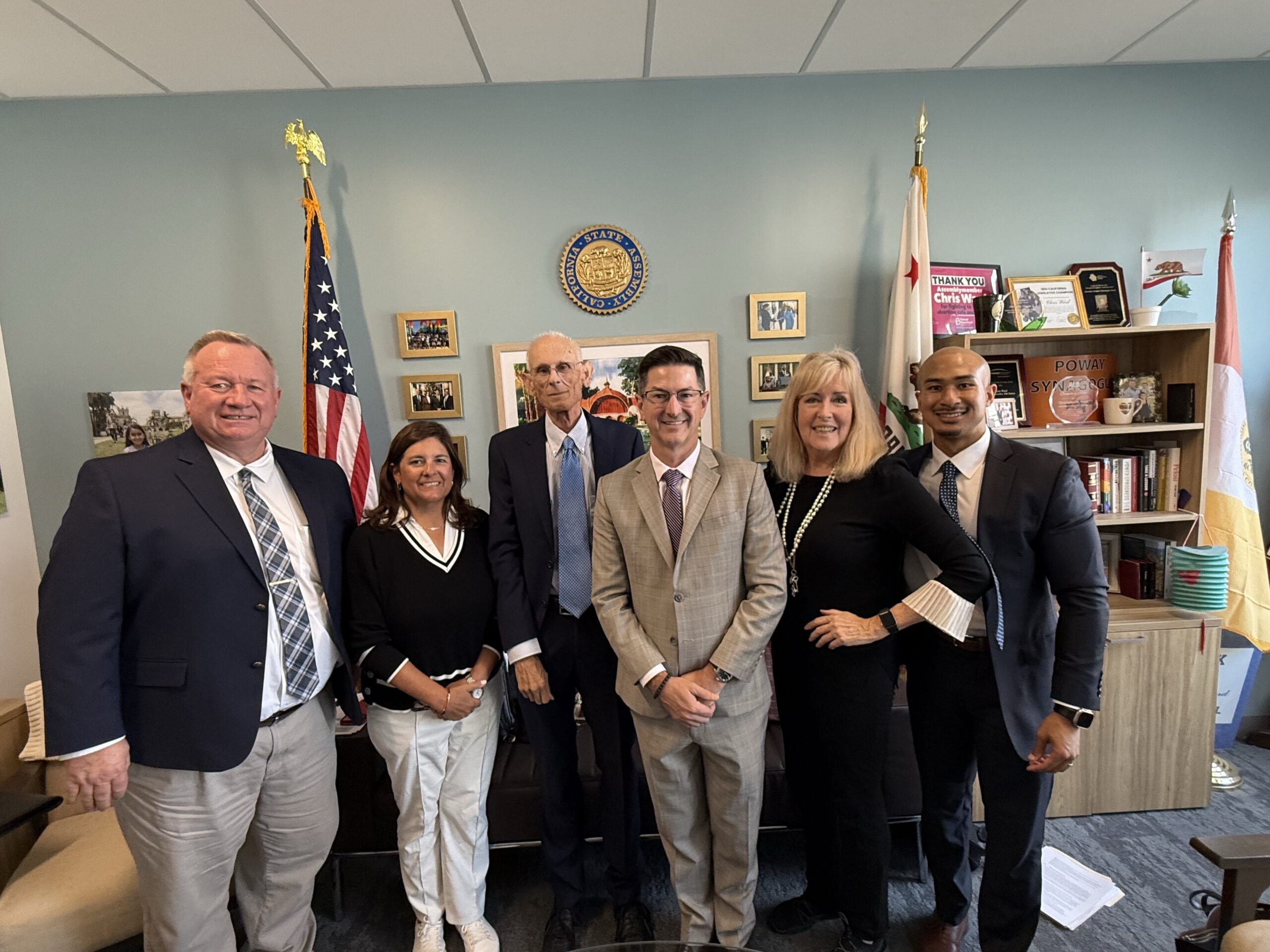
Enough about the procedural accomplishment. What about the substantive accomplishment? Nothing can provide a better understanding of that than the following excerpt from the letter that the City of Los Angeles’ Recreation & Park Department filed in support of AB 1954:
“In April 2024, we implemented a nonrefundable green fee deposit requirement at the time of booking. Fully funded by our golf patrons and designed to discourage speculative reservations, this measure has restored a measure of integrity and equitable access to our reservation system. However, relying solely on internal administrative measures to counter those seeking to profit from Los Angeles’ commitment to affordable, accessible public recreation is not a sustainable solution. Without stronger legal protections, these efforts remain vulnerable.”
And those who played public golf in Los Angeles, Orange, and San Diego Counties in 2024 certainly remember the public outcry about 3rd party intervenors capturing large tranches of municipal tee times, selling them at premium rates, and scooping up the differences for themselves. Seeing an opportunity in municipal commitments to keeping their publicly owned parkland golf courses affordable and accessible, they took it.
The problem? There was nothing about taking that opportunity that was unlawful. However, there was something about failing to report and pay taxes on the fruits of the opportunity, and that is why a couple of them pleaded guilty to criminal tax evasion last month – to be precise for failing to report somewhere between $700,000.00 and $1.2 million in income derived from selling municipal tee times in the greater Los Angeles area over a 2-year period. Seven hundred thousand to 1.2 million dollars represents more than enough “opportunity” to entice others to get into a “business” that requires so little overhead.
AB 1954 solved that problem. The very conduct of that “business” is now an unfair business practice in California’s Business & Professions Code. The City of Los Angeles (and many others) now have a tool they can use to maintain control over their tee sheets, access policies, and pricing schedules, or as AB 1954 author Chris Ward (D-San Diego) put it, “Public golf courses belong to the public.”
CAG delivered the state’s largest city (not to mention many others that taken together own and operate 22.4% of California’s golf courses) the “stronger legal protection” it (they) needed, making clear that advocacy is not just about tackling flawed bills and regulations; it is just as much about using the organs of government to solve problems. And it is always about making the game better not just for SCGA’s 230,000 members, but for all of the 3.5 million Californians who play and love the game.