Working Bells
Southern California’s first family of golf course design.
In the current climate, where acclaimed golf course architects are celebrated like rock stars, it only intensifies the spotlight that should shine on William P. Bell and his son William F. Bell — but doesn’t.
Let’s right that wrong. Given the indelible impact the Bell family has had on four generations of Southern California golfers, it’s easy to see why Billy Bell Sr. and Jr. were selected for the SoCal Golf Hall of Fame in 2017. Yet, somehow, they continue to fly under the radar.
William Park “Billy” Bell flourished from 1920 to 1930, and again after World War II, when his son William Francis Bell, known as Billy Bell Jr., joined him in the practice. The Bells designed or redesigned more than 300 courses in 10 states, a number exceeded by only a handful of other practitioners. Their golf designs have hosted four U.S. Opens and more than 150 PGA Tour events. So why aren’t father and son Bell household names? It’s complicated.
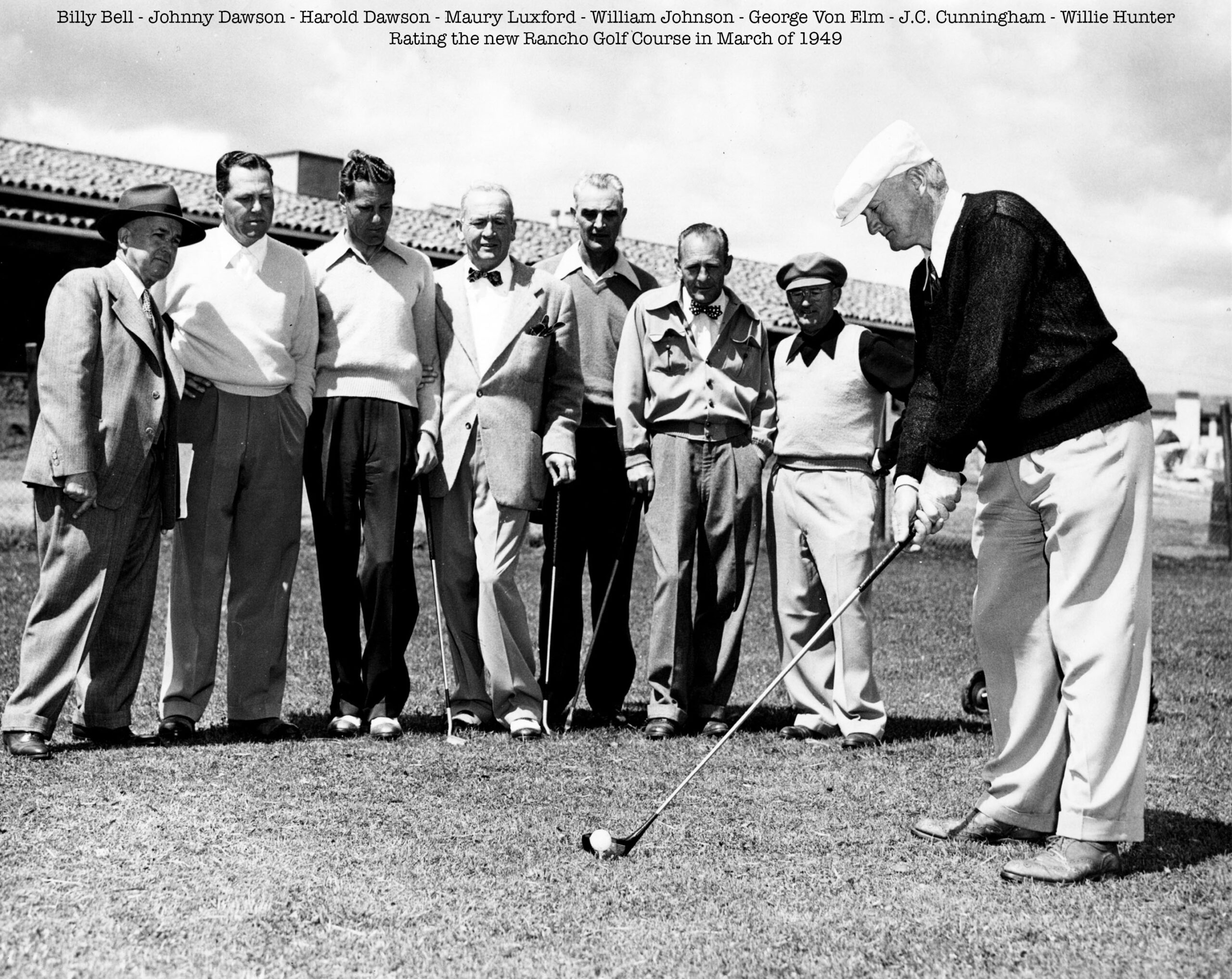
Diminutive Pennsylvanian Billy Bell settled in Southern California in 1911 at age 25. A caddying stint at Annandale GC led to the greenkeeper’s job at Pasadena GC (now Altadena GC). In time, he began to assist the region’s most prolific architect, William Watson, as construction superintendent before launching his own design practice in 1920.
Bell’s prowess with turfgrass and feature shaping found him collaborating with other architects as well, notably George Thomas Jr., with whom he teamed to build LA’s “Big 3,” The Riviera CC, Bel-Air CC and LACC. Thomas, a fellow SoCal Golf Hall of Famer (2008), reaps the accolades these days for those fabled layouts, but in the day, he unhesitatingly credited Bell.
In his 1927 treatise, Golf Architecture in America: Its Strategy and Construction, Thomas stated, “In most of my California work I have had William Bell, of Pasadena, in charge of construction, and to him I owe much of the success of what I have done. A fine architect himself, Bell has always been loyal to me. He has gone far and will go further in golf construction.”
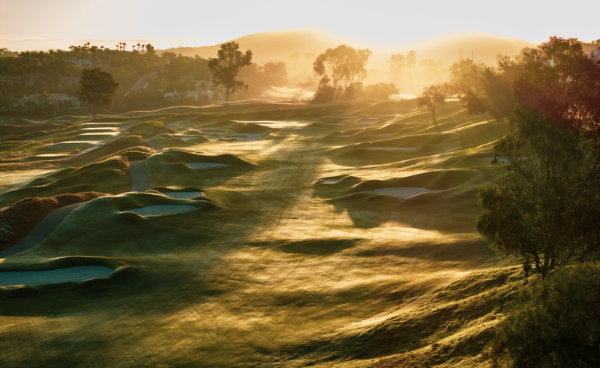
Experts tout Bell’s talents as a master bunker builder, his best work displaying elaborate shaping and intricate edging. A skilled router of golf holes, he also excelled at taming difficult sites with engineering and drainage feats that were extremely sophisticated for the era.
Because Bell’s contributions to LA’s Big 3 have been obscured over time, his actual genius often gets overlooked. Unfortunately, such is also the case with his solo creations. Among his best designs that exist today are local standouts San Diego CC, Woodland Hills CC and La Jolla CC. But what might have been.
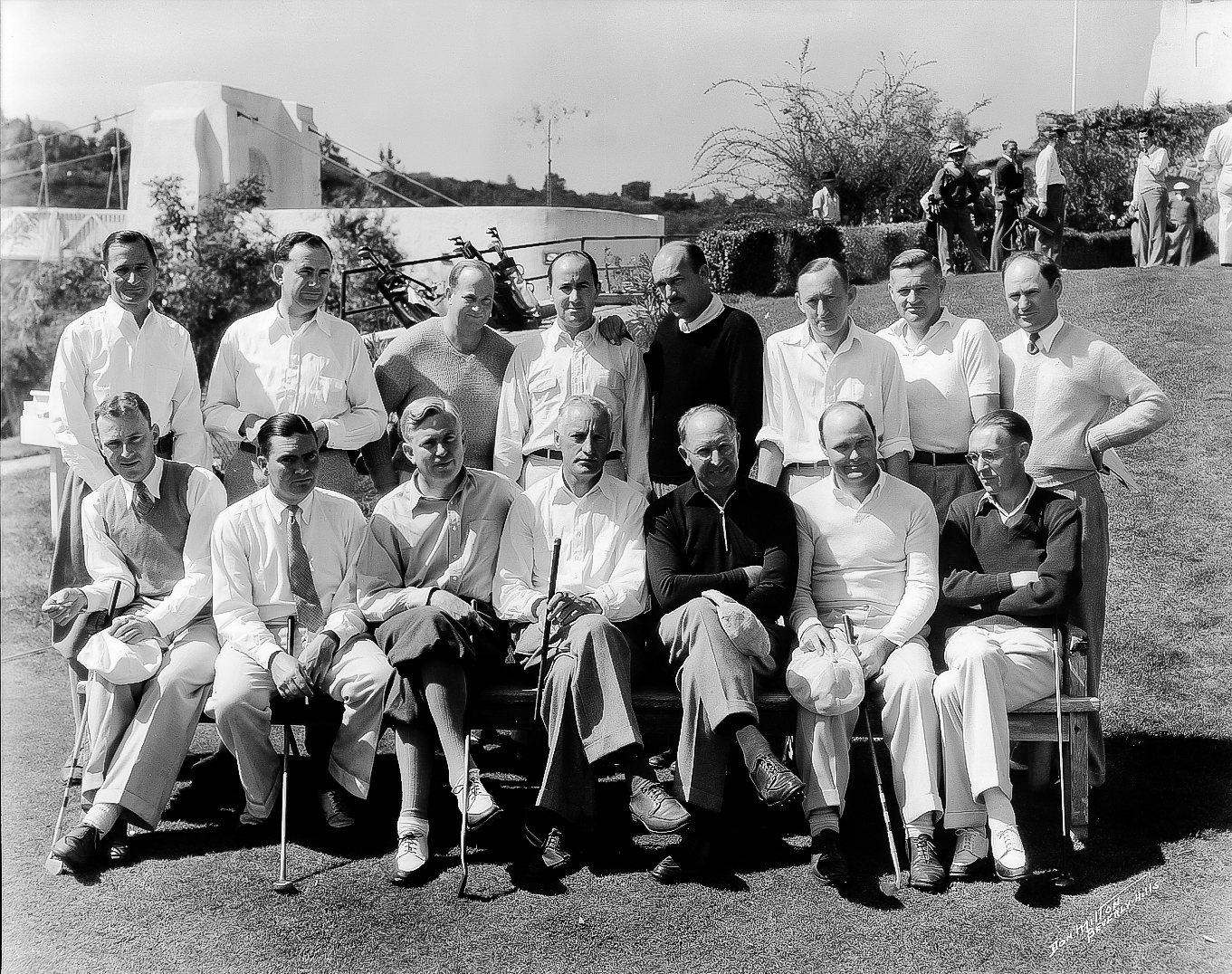
Some of Bell’s greatest Southern California triumphs failed to survive the Depression, or post-WWII community expansion, when courses were sacrificed for freeways and buildings. Most tragic was the
rapid demise of Royal Palms in San Pedro, on the edge of the Palos Verdes Peninsula. Built in 1927 and gone by 1933, Royal Palms was truly spectacular, according to historian Daniel Wexler, draped on 350 clifftop acres above a secluded section of Pacific Ocean beach. Had Royal Palms prospered, perhaps Billy Bell would have been as famous as Thomas, Alister MacKenzie or Donald Ross.
LIKE FATHER, LIKE SON
Billy Bell Jr. joined his father after World War II. Together, they crafted more than two dozen new designs from 1946-1953, including Tamarisk CC in Rancho Mirage and Newport Beach CC. Upon his father’s death in 1953, “Junior” honored him by renaming the design firm, William P. Bell and Son.
Young Bell became even more prolific than his dad, designing more than 200 courses throughout the West, including Bermuda Dunes CC and Sandpiper GC in Goleta.
Architecture scholar Ron Whitten noted in Golf Digest that Bell’s 36-hole Industry Hills GC was one of history’s most important designs. “It was one of the earliest and most prominent golf projects constructed atop a city dump, what government officials more politely call a sanitary landfill,” said Whitten. “Its success encouraged other communities to use golf as a reclamation tool.”
Both Bells get some credit for Torrey Pines GC, but it’s tricky. The elder Bell contracted with the city of San Diego in 1950 to submit a plan for the city-owned 18-hole course in the Torrey Pines vicinity. However, approval for the final plan — of 36 holes — didn’t occur until 1955, two years after he passed away. It was Junior who actually designed the North and South courses, but under the auspices of William P. Bell and Son.
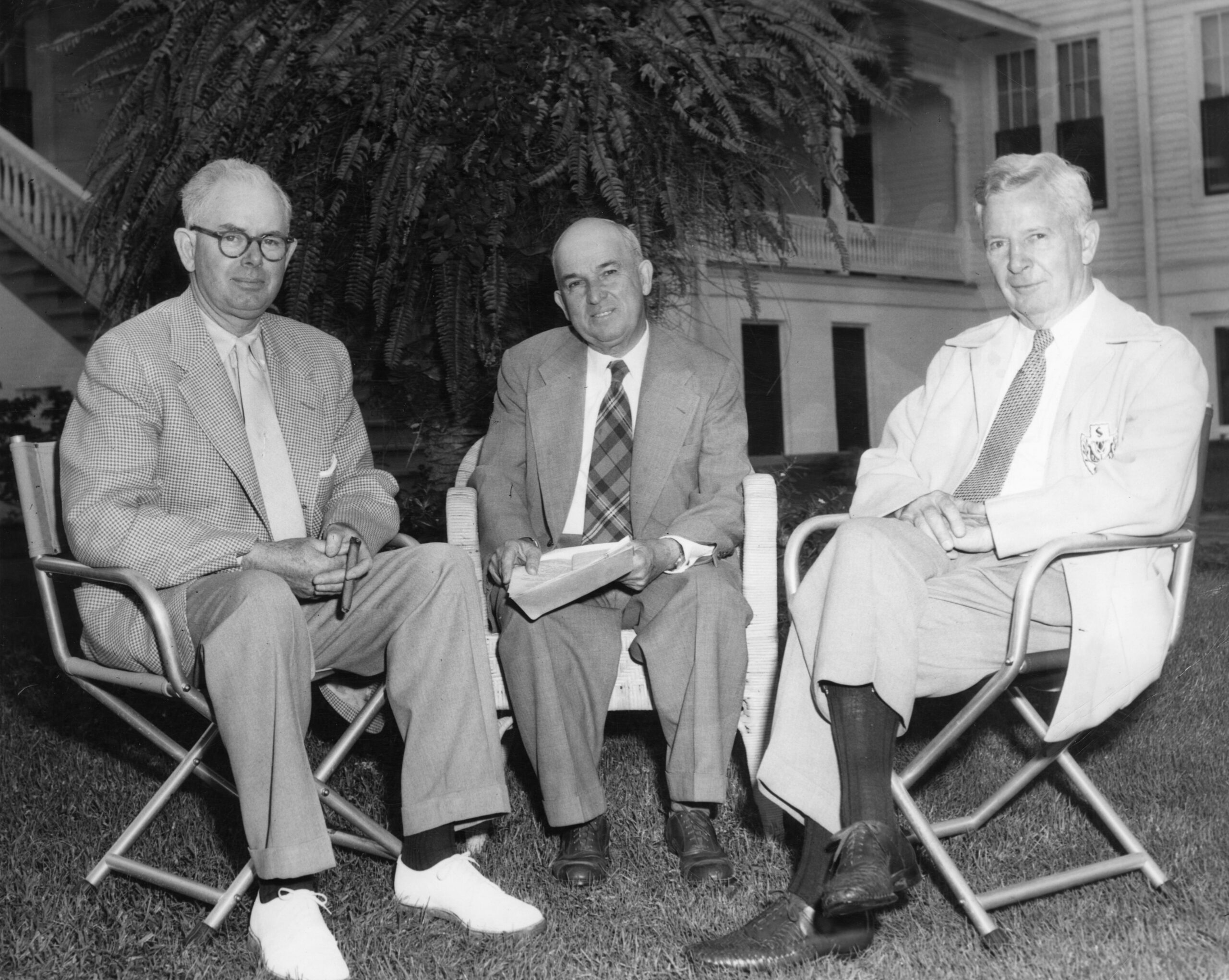
A heart attack felled William P. Bell in Pasadena. Remarkably, Billy Bell Jr. was similarly fatally stricken, also in Pasadena, in 1984, at nearly the same age. Both deserve their Hall of Fame status, though both merit more lasting renown.
Either way, Southern California’s first family of golf course design left a legacy of enjoyable-to-play layouts that will outlive us all.