Working Man’s Major
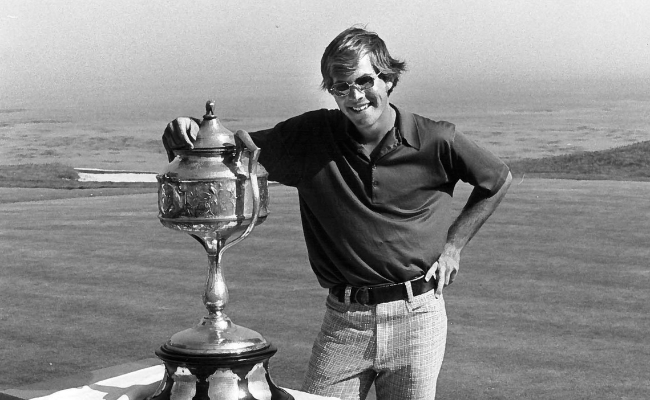
Former champions and players look back at the California Amateur Championship when it was contested at Pebble Beach GL and Cypress Point Club.
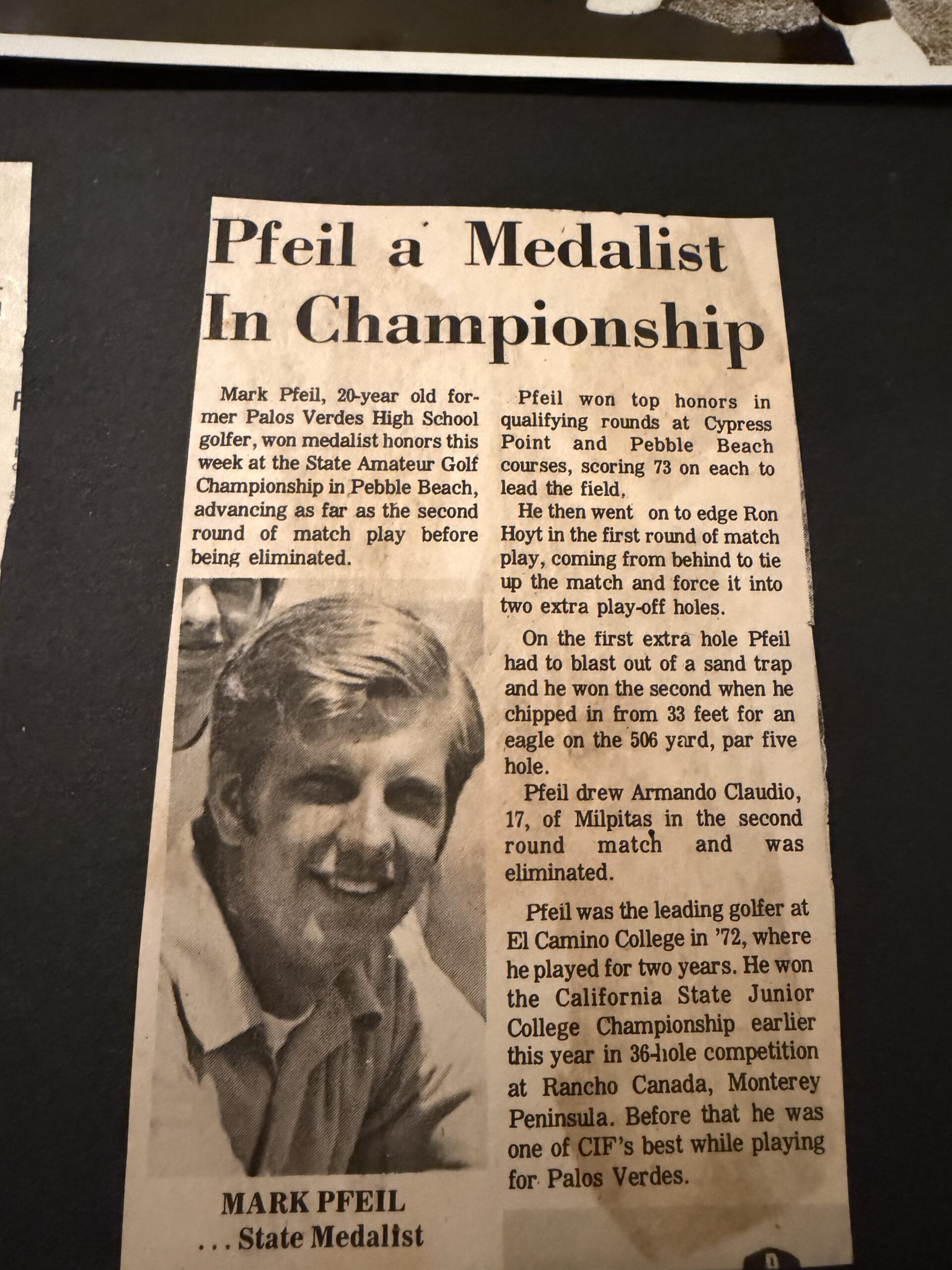
Long, long ago, in the late 1960s, when the U.S. Postal Service was a critical conduit to the outside world for a teenager, there was one time of year that Mark Pfeil kept a close eye on the mailman in his Palos Verdes neighborhood. Already an avid competitive golfer, he anxiously waited for his entry paperwork for the California Amateur Championship.
Even at 16, Pfeil recognized what an extraordinary opportunity it was to tread the ground at two of the most renowned golf courses in the world — Pebble Beach GL and Cypress Point Club.
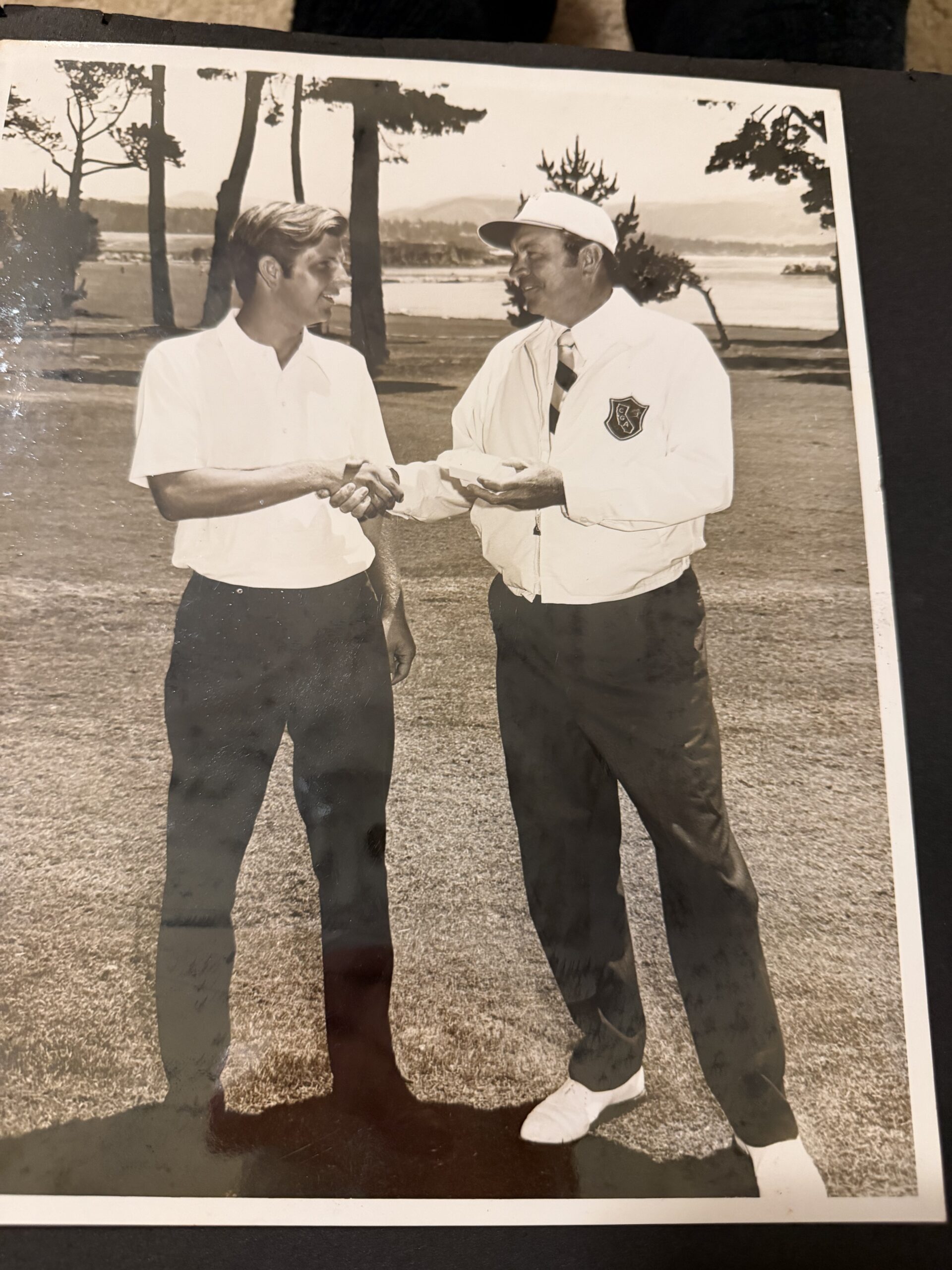
To have the chance to play those almost mystical layouts, for the cost of a stamp and a nominal entry fee, is why Pfeil grabbed that letter from the California Golf Association, scribbled out the form and sent it right back, lest he get shut out. “I waited on pins and needles to hear back,” Pfeil recalled recently.
Pfeil would go on to a notable golf career that included All-America selections at USC, a Walker Cup appearance and a three-decade pro career that included a PGA Tour victory at the 1980 Tallahassee Open. Yet, in reflection, he says playing on the Monterey Peninsula in the California Amateur counts among the best times in his life.
“Pebble Beach is iconic and my favorite course in the world, and I played in pro tournaments up there,” Pfeil, now 74, said. “But I always go back to my amateur days and my appreciation for being up there and playing those great courses.
“To this day,” he added, “I still get goosebumps just driving through there.”
THE BEST TOURNAMENT IN THE COUNTRY
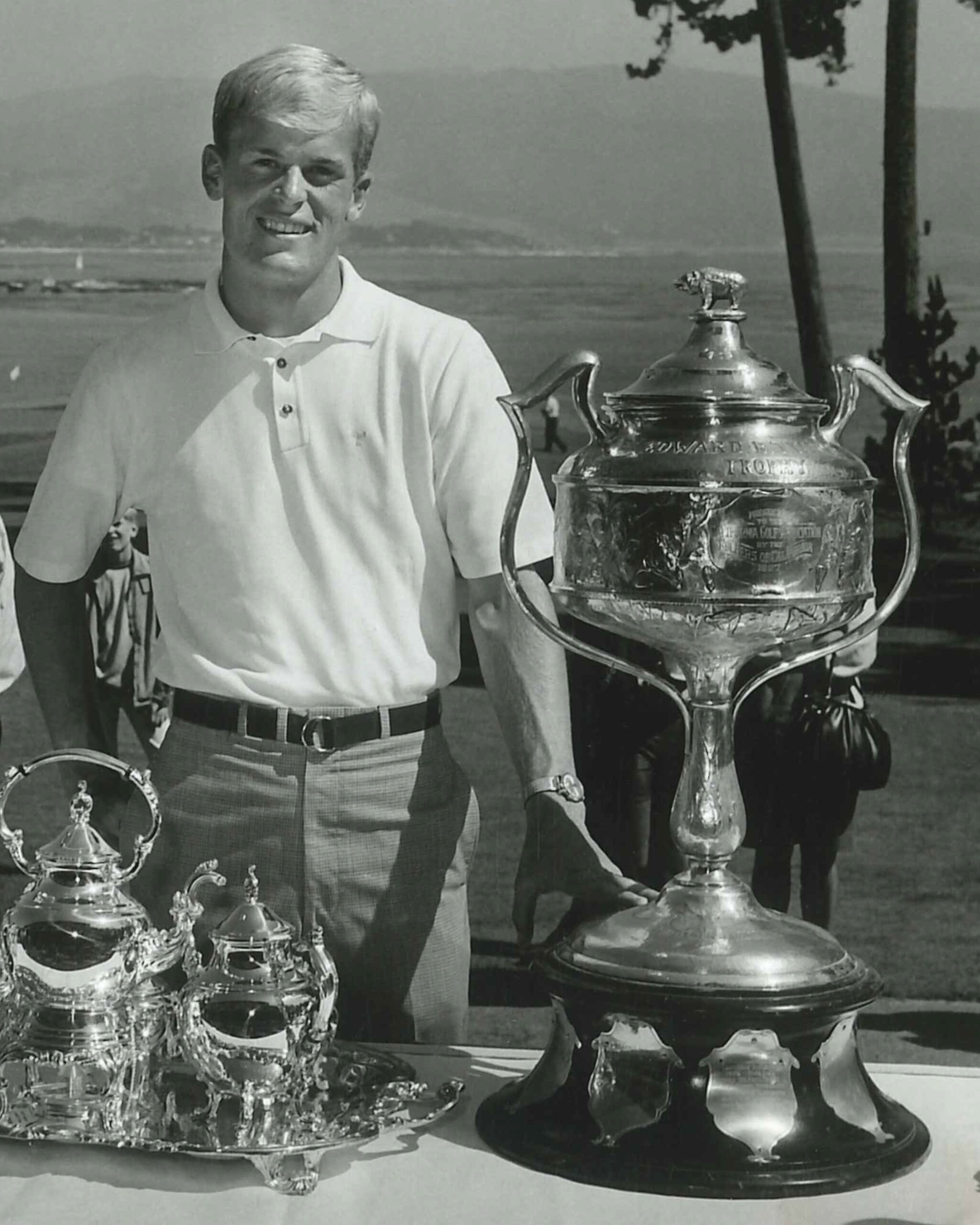
The 115th California Amateur Championship was contested in late June at Hacienda GC in La Habra Heights, and the stakes were high, with the winner earning, among other perks, an exemption into this year’s U.S. Amateur. This summer marks 20 years in which the tournament has rotated between Northern and Southern California venues, after Pebble Beach’s 86-year run as the primary host site ended in 2006.
Some of the state’s most renowned pros and amateurs — many of them now in their 60s and 70s — lament that younger generations aren’t enjoying the same experience, while knowing that they were truly fortunate to soak up the glory days playing in what was often described as the “Working Man’s Major.”
The setup was this: 200 golfers reached the championship from one qualifier each in the state’s north (played at The Olympic Club) and south (Los Serranos GC). Once in Monterey, the competitors rotated the first 36 holes between Pebble Beach and Cypress Point (and numerous other courses in varying years) for a cut to be made to 64. Those survivors played another round at Pebble Beach and were then trimmed to 32, and match play commenced (this was the format from 1974-1988). So, if a player could reach the 36-hole match-play final, he would have enjoyed playing eight rounds at Pebble Beach and one at Cypress.
To put that in perspective, with a current cost of $695 for a round at Pebble, eight trips around would be $5,560, and Cypress is accessible only to members and their lucky guests.
“I think the State Amateur, back in the era when I was playing it, was the best tournament in the country,” said Craig Steinberg, 69, one of California’s most decorated amateurs. “The U.S. Amateur came close, but it had hundreds of players and was a circus at times. The State Am was smaller and the courses were unparalleled. How else would you ever get on Cypress Point?”
Another renowned amateur, Santa Barbara’s John Pate, played in more than 20 State Ams and won the title in 1995. He played in the biggest amateur tournaments around the country and always got the same question: “You guys play your state amateur at Pebble Beach?”
“They couldn’t believe it,” Pate said. “It was so cool.”
FAR MORE THAN GOLF
Though the tournament was viewed with extreme reverence by the top competitors, it was about far more than golf. With many of the players having families and holding down jobs, they had to get vacation time for the State Am, and then often would room together in houses. Beer and barbecue were on the agenda almost every evening.
Families were integral to the tournament. Rancho Santa Fe’s Ed Cuff, 65, who captured the 1998 Cal Am title but is probably best known for eliminating Tiger Woods in the 1994 semifinals, recalled his wife, Kathy, driving around in an SUV to try to get a glimpse of Ed’s matches while the kids watched videos from the backseat.
A few years later, it was Kathy who toted Ed’s bag for 130-something holes when he captured his title.
“The only time I was ever in charge,” Ed quipped.
The State Am also was an opportunity for players from both ends of California to get to know each other in an era when many of them stuck to local tournaments. Friendships were formed and lifelong bonds were made.
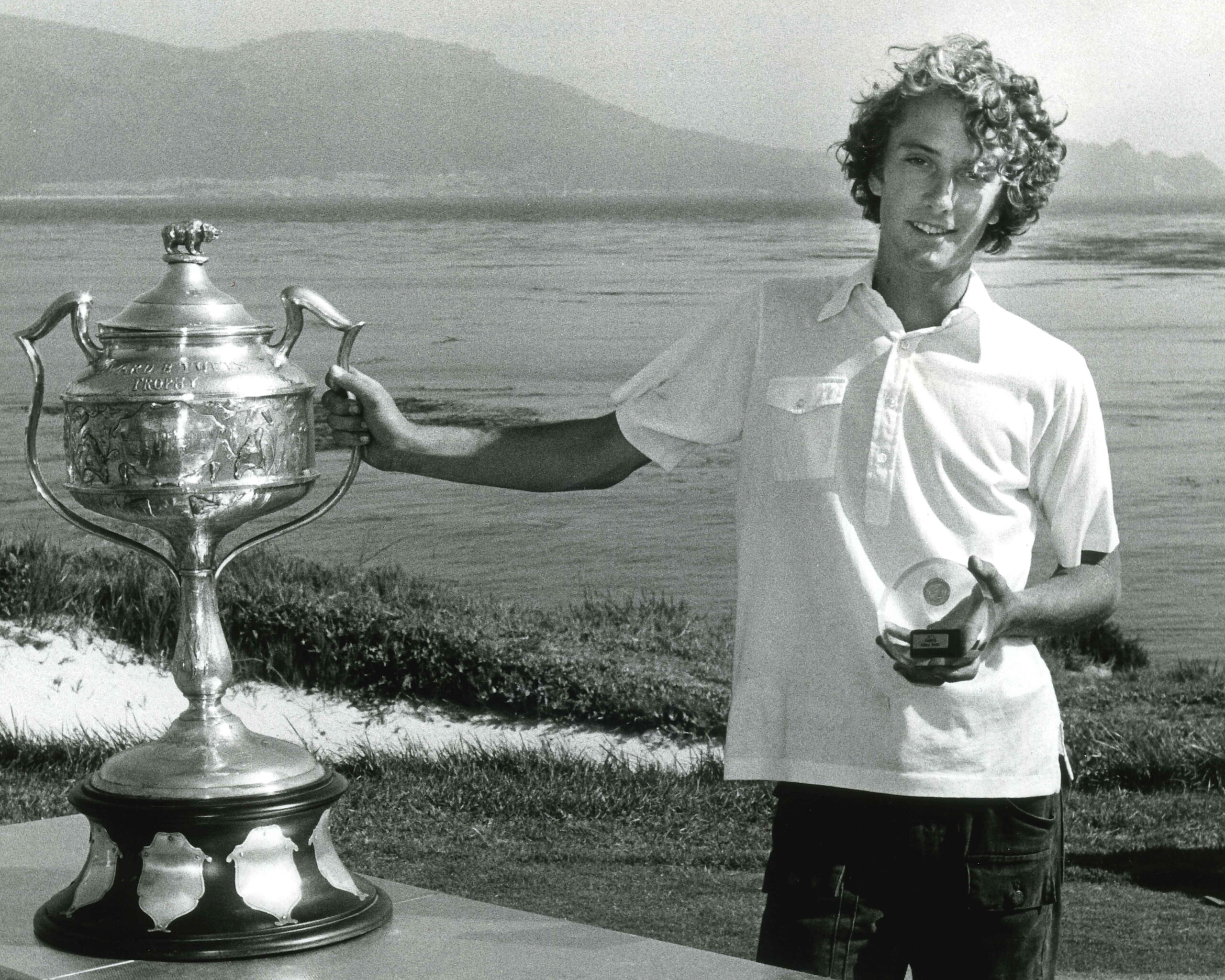
“It was a lot of great players who got to see each other. This was our major,” said Pat Duncan, 70, a fixture and character who is one of the best amateurs San Diego has produced.
Cuff advanced deep into match play many times, but he also remembers the tournament as much for camaraderie and building of relationships that lasted through the years. Just recently, he drove up to Orange County to have lunch with Don DuBois, who became the second-oldest champion of the event when, at 46 in 2005, he beat 17-year-old future tour pro Joseph Bramlett.
There are State Am winners that most golf fans would recognize because of their eventual pro success — Xander Schauffele, Gene Littler, Ken Venturi, Johnny Miller, Mark O’Meara, John Cook, Duffy Waldorf, Jason Gore — but so many more champions who were incredible players known only in tight amateur golf circles. Game recognized game.
Among the northern stalwarts was Casey Boyns, now 70, who is a career caddie at Pebble Beach and still loops there five days a week. He spent much of his youth on the Monterey Peninsula, playing junior tournaments at Pebble Beach (free hot dog and drink included). As a high schooler, he’d sneak onto the course with friends in the evenings when the guys in the pro shop willingly turned a blind eye. Of course, the greens fee back in 1970 was $20.
Boyns has won dozens of amateur titles, but among those he cherishes most are his two victories in the State Am. He was 33 when he beat thenUSC star Dave Stockton Jr. in 1989. After earning medalist honors in 1993, Boyns got what he felt was validation for the first win by beating childhood friend Joey Ferrari in the final. In both cases, what meant the most was to win in front of his father, Leonard, who’d touted the virtues of the State Am to Casey since he was 10.
“My dad used to come watch me, and I’d shoot a million and he’d go home disgusted,” Boyns said. “So, to make my dad proud made me proud.” After the first victory, everyone in Boyns’ circle went back to his house to party. He was interviewed for the TV news and the local paper ran a big headline the next day. “I was in hog heaven for along time,” Boyns said.
Now 66, John Pate would come into his own in competitive golf in his mid-amateur years, and in 1995 he reached the State Am final under wrenching circumstances. He and his wife, Susan, were in the final stages of adopting a baby girl when the birth mother took her back just before the tournament.
“It was devastating,” said Pate, who wanted to withdraw. Susan, however, convinced him that it would be good to get away, and he said he played well “because the tournament didn’t mean anything.
”Using a Vijay Singh routine he’d heard about that involved counting while he putted, Pate wielded a hot flatstick, reached the final and battled eventual winner Jeff Sanday to a draw until making bogey at 17. “It would have been cool to have my name on the trophy with my friends,” Pate said. “The whole experience was kind of surreal.”
The family part of the story has a wonderful ending. Five years later, the Pates adopted a son, and a year after that they welcomed a daughter.
GLORY DAYS
As much as we marvel at the difference in the price of Pebble Beach from back then compared to now, consider that for 60 years, from 1930 to 1989, qualifying rounds in the State Am were played at what is now one of the most exclusive clubs in the world, Cypress Point.
Cypress Point has jockeyed back and forth with Pine Valley and Augusta National in Golf Digest’s top-3 ranking of America’s greatest courses, but back then it was far more open to the outside world. Beyond the State Am, it regularly hosted the PGA Tour’s Bing Crosby Clambake.
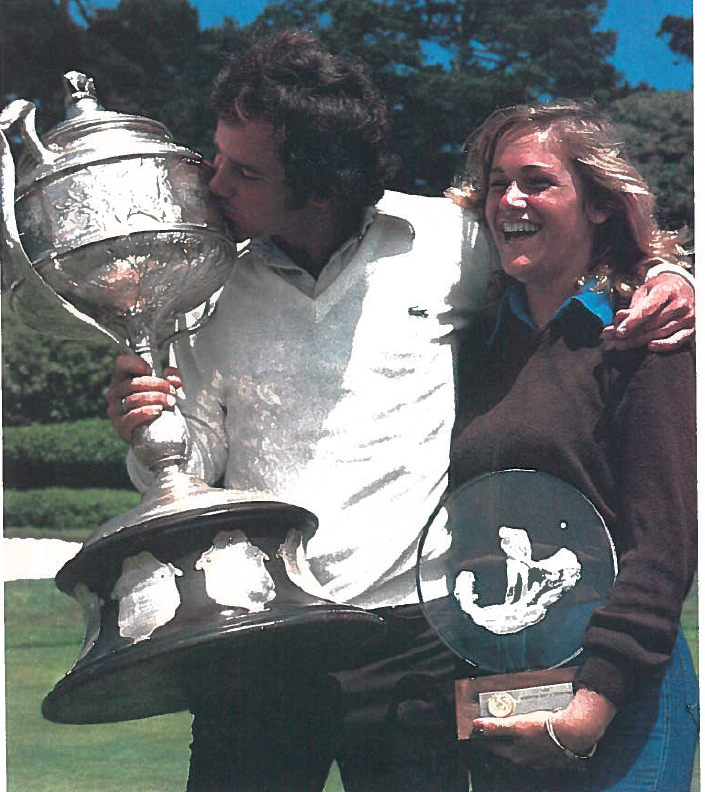
Long before that, the competitors in the State Am pinched themselves over getting to play what is arguably architect Alister MacKenzie’s greatest masterpiece. “A religious experience,” Cuff said. “Every hole has an argument for why it’s the coolest.”
First-timers gaped in awe at their initial impressions of the grounds, and the way some of the veteran players looked at it, you were all but doomed to get crushed by Cypress as a newbie, with no caddies, yardage books or yardage markers.
For every player, there was the “wow” moment of arriving at Cypress Point’s closing stretch, beginning with one of the most beautiful par-3s on the planet at No. 15. Then came the diabolical 16th — a par-3 only by designation because it stretches to 230 yards with a full carry over waves crashing into the cove. The smart play, considering big numbers were death for making the cut, was to not even go for the green, but to lay up left and hope for a par or bogey.
Players who were out of contention might “Tin Cup” it and end up writing a score in double digits. Veterans knew that you couldn’t win the tournament at Cypress, so why take a chance. “The risk-reward was terrible,” Duncan said. “I’d see guys go for it and think, ‘That is so dumb.’”
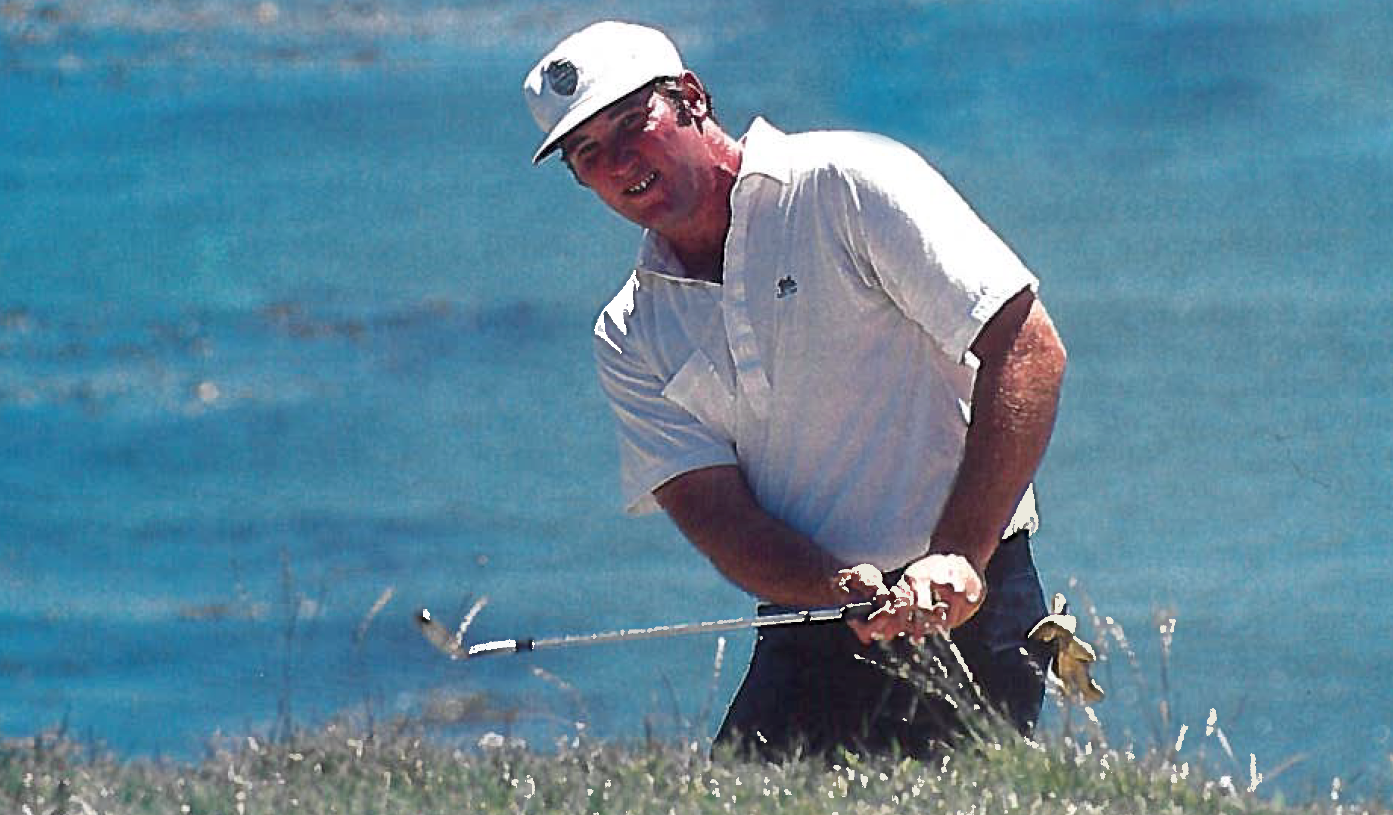
Considering its greatness, Cypress Point was a steppingstone to a State Am title. The glory came at Pebble Beach. Over more than eight decades, thousands of golfers labored to at least reach the final 32, a feat that granted automatic entry into the next year’s tournament.
Cuff was among an elite group of mid-amateurs who almost always got to match play. His rivals feared seeing the career bank executive’s name on their side of the draw.
Over the years, Cuff said he developed a precise game plan for how to manage Pebble. “On every shot there was a spot where you had to hit it,” he said. The strategy served him well, with a few trips to the semifinals and two appearances in the final.
“I think I played as well as anybody else did for that same time,” Cuff said. “I kind of put my own stamp on what I could do there. I could have won more, but I didn’t.”
Cuff finally got his hands on the trophy in 1998, when he routed Bobby Rodger 5 and 4. “They say there are mountains on the way to the scorer’s tent, and I hadn’t really won that much,” Cuff said. “I was relieved I had finally achieved something.”
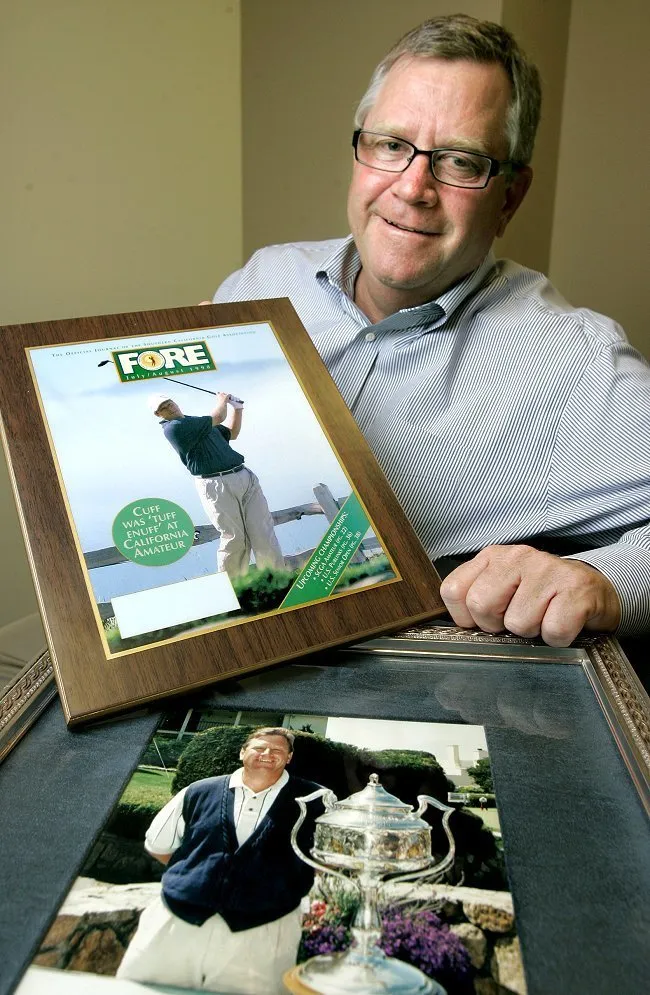
The victory was sweet, but Cuff knows that it’s not what he’s most famous for in the State Am. The brightest light was on him four years earlier, when the then 33-year-old went up against an 18-year-old Tiger Woods, who was making what would be his only appearance in the tournament.
“Tiger had played in the (Buick) Classic (at Torrey Pines) the week before with Greg Norman and Tom Watson,” Cuff recalled. “I think I had played in the San Luis Rey member-guest. I said to him, ‘Weren’t you on TV last week?’
“But I was pretty cocky with my golf game. It was Tiger, but I wasn’t shaking in my boots.”
Tiger went 2-up after 10 holes, but Cuff won four of the last eight, and when Tiger three-putted for bogey at 17, that gave Cuff the lead in a 1-up win. It was Tiger’s only defeat in the 20 matches he played that year. And while Cuff, who lost the final to Steve Woods, went back to his job, Tiger captured the first of his three straight U.S. Amateur titles later that summer.
Less than three years later, Tiger won his first Masters en route to 15 major championship victories.
“I don’t think I slowed him down too much,” Cuff jokes now.
It’s been a fun story to tell all these years, and a treat for Cuff to be among the most revered and remembered players in a tournament he loved so much.
“They recycle (the win over Woods) as a trivia question every few years,” Cuff said with a laugh. “Frankly, I don’t think Tiger likes hearing it.