99 Is the New 50

What happens when an above-average amateur tries to qualify for a professional event?
With more of life in the rear view than on the horizon, there are those who heed the calling of a snap to action at age 50. Some climb mountains; some write books; some travel Europe; and some, like me — as a recently minted 50-year-old with a modest 10.8 handicap — decide to try their hand at PGA Tour Champions qualifying.
My aim: To get into the field of the annual Hoag Classic at Newport Beach CC, featuring a legit marquee of yesteryear’s studs. For a chance to compete alongside such luminaries, all anybody need do is finish in the top five of a full-field pre-qualifier held at Goose Creek GC in Jurupa Valley, and then, four days later upon the same grounds, advance through the actual event qualifier as one of the top three finishers.
Such is the mountain I chose to climb.
RANGE RAT
Upon registering for the event in early February, I had 43 days to prep for the March 20 pre-qualifier, and I missioned myself to practice or play on at least 30 occasions across the time window.
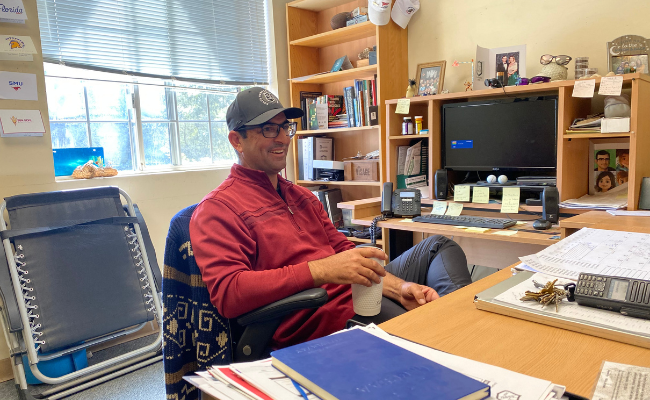
Along with my own range work and rounds, I enlisted the expertise of Bryan Lebedevitch, director of instruction at the PGA WEST Golf Academy in La Quinta and annually recognized by multiple outlets as being among the nation’s top teachers.
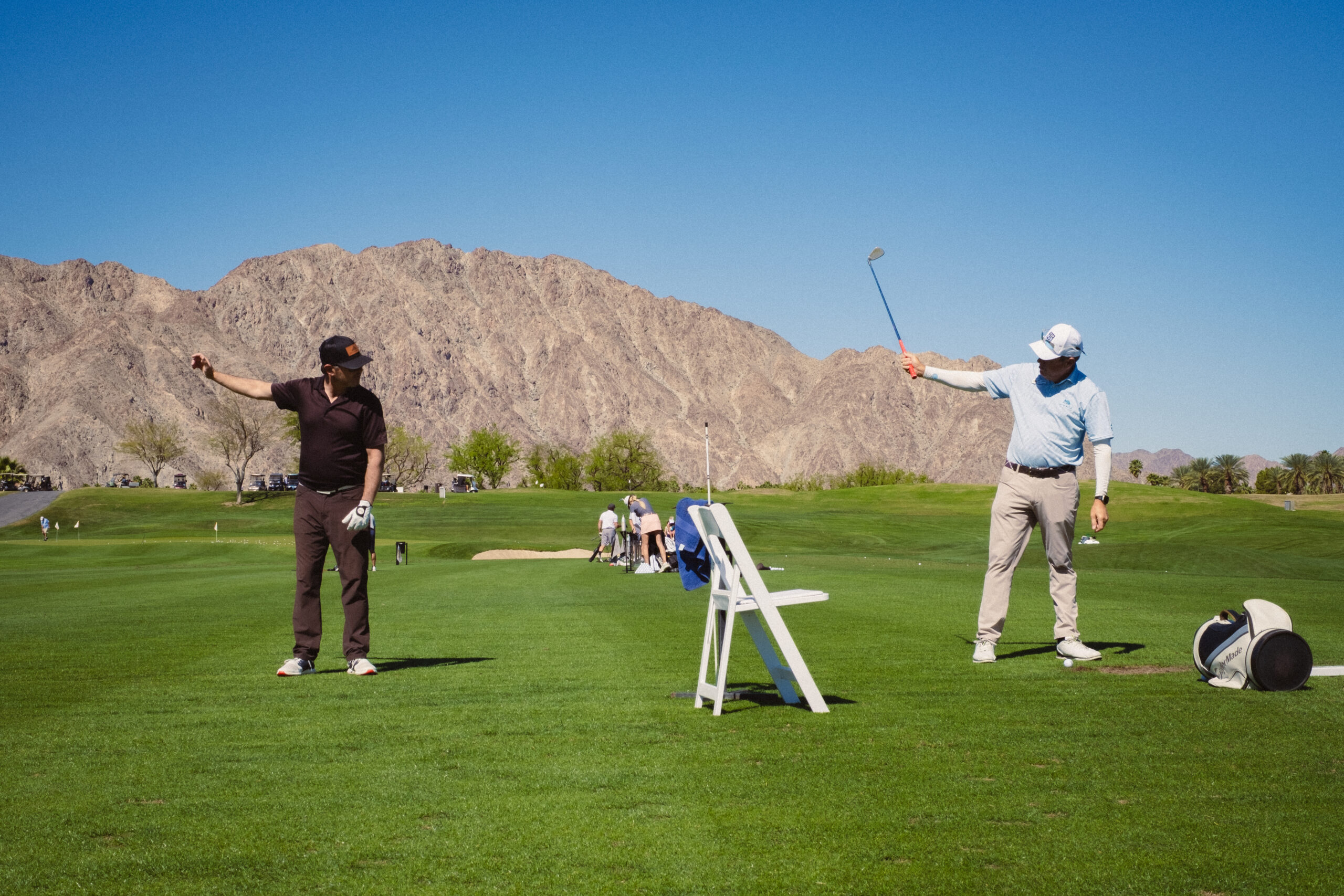
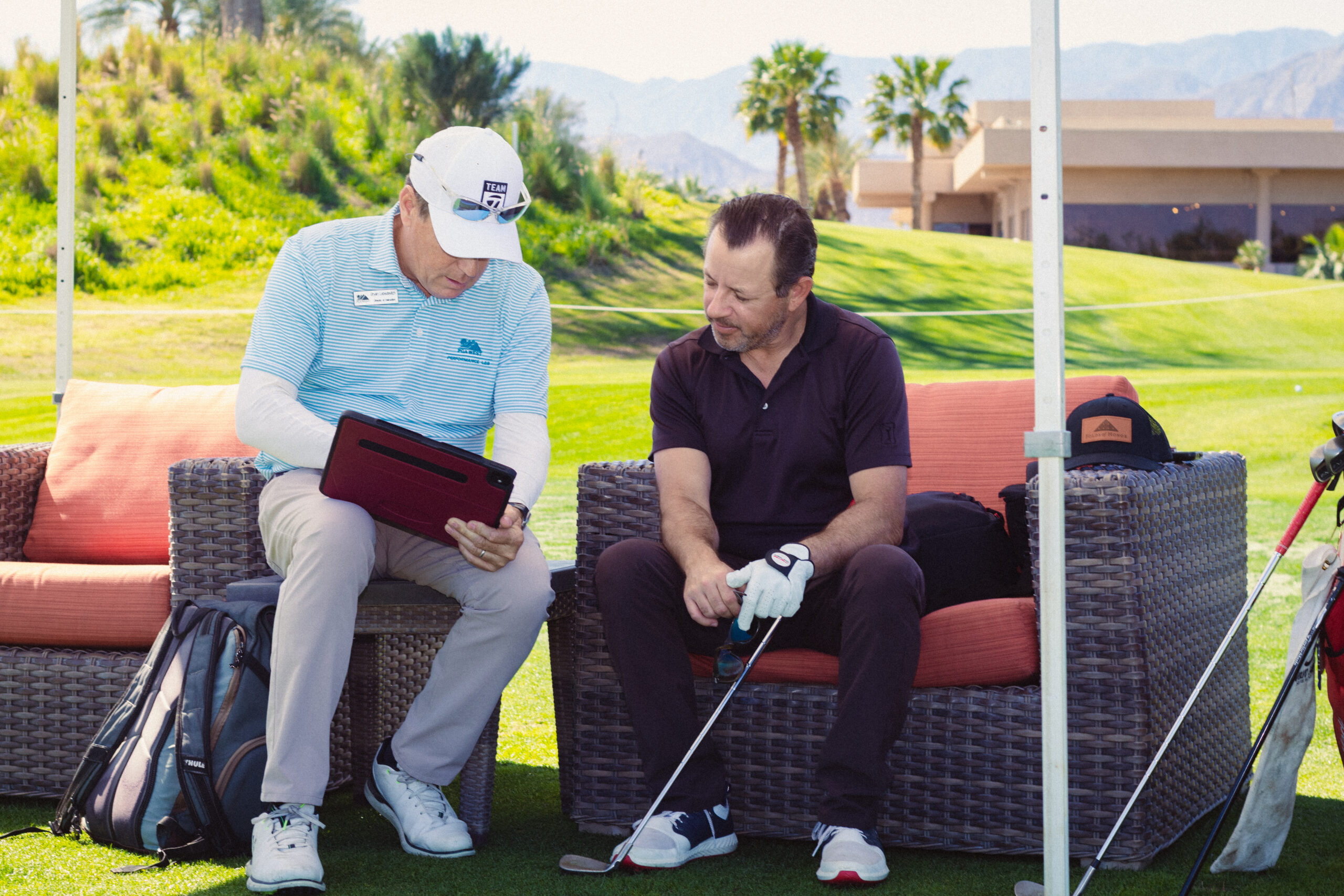
In the first of multiple sessions in which he volunteered his time, Lebedevitch applied instant fixes to inconsistencies in my setup, with a focus on widening my stance and doing away with my bad habit of regripping in the backswing.
In turn with the physical, our time was well spent talking about the undoubted anxieties I’d encounter playing amid a field in which I was certain to be outclassed.
“You don’t make the stress go away; it’s just how you deal with it,” he told me. “Most of these guys will have done this so many times that they’ll have routines to deal with it well.”
With my competitive golf experience limited to a few handfuls of SCGA One-Day Series events, I knew that the pre-qual would present a more intensive animal.
“It’s just that feeling of uneasiness, and that what you’re doing matters; for most people in your position, it’s just trying to feel normal,” Lebedevitch added.
Keeping a journal of each round and every practice, my prep became emphatic, perhaps obsessive as the calendar flipped to March.
The more I thought about the impending round, the more I felt the need to have a club in my hand. I started engaging in two-a-day sessions; I banged balls until I was the last one on the range; I chipped until the sun fell behind the San Jacintos.
My hands hurt; swelled like mittens. My fingernails required constant keeping as they began digging into my cracked skin. I developed calluses like Corn Nuts. Weird parts of my 50-yearold body began a coup against me; whatever muscle is above the right hip was in constant swell and my bloated hands tried daily to reach back and massage what I think might be the rhomboid minor.
Days to the pre-qual scrolled closer, and, in concert with having all manner of strange golf dreams, I alienated my girlfriend and vexed my dog and started playing Tetris with my work schedule.
On my final day of event prep, I made a notation of “Session 33” in my journal and counted that I’d had a club in hand every day, save for one, from the final week of February through the pre-qual’s precipice.
And then I went out at sunset to chip one more time.
WHAT’S GOOD FOR THE GOOSE
I arrived at Goose Creek 90 minutes before my tee time and went directly to the practice green in triple-digit heat while scanning the 50-set competition, which, as one might imagine, consisted of more salt than pepper flowing from ball caps; a few handfuls of beer bellies; and a whole lineup of stellar golf swings.
After a (nervy) range session, I headed to the cart staging area and introduced myself to my playing competitors. Among the pairing: Tracy Vest, a 53-year-old teaching professional from Iowa City, Iowa. An outgoing and affable guy, Vest is a former Iowa section champion who qualified for the PGA Tour’s John Deere Classic in 2024.
Starting on the latter side of Goose Creek, the SCPGA official provided our cards and announced that “Spicer will be teeing off first.” Great.
I walked to that 10th tee box, knees knocking, heart jumping and silently told myself: Do NOT stand over this ball too long.
And I didn’t. I banged one; a nice 255-yard pop with a baby cut.
Then I watched my playing competitors tee off, their stellar swings powering far past my ball and I remembered Lebedevitch telling me: “Worry about yourself and what you can do, and not the other people in your group.”
Nice start granted, it didn’t take long before I required revisit of other pieces of expert direction. Standing over a mere P wedge, I hit a hoseled laser and watched my ball pop off the cart path into some grungy O.B. And if my heart wasn’t racing before, it was now, as I hunted hopelessly before returning to the spot of my initial approach and carded an eventual triple on my opening hole.
And while the remainder of that front side did result in some sound tee play and a respectable short game, a lack of competitive comforts continually found me in treacherous places across a tricky Goose Creek, which sports some seriously undulating greens and very aggressive runoff areas from putting surfaces.
Time and again, I tried to stay calm and consider more words from Lebedevitch:
“Playing competitive golf, it’s not always about how good of a shot you hit; it’s how good your bad shots are and being able to play them,” he’d advised.
Seeking stability, my front side card read like an international phone number: 7-4-7-5-4-8-3-9-6.
And yet, salve would arrive, some evidence that all my prep and sweat and time and toil was worth it.
Come the flip to the front nine, my mind finally quieted to the tune of three straight pars on Nos. 1-3, followed by a tap-in bogey on the par-5 fourth. An ensuing four-putt (gulp) would derail that run and I slipped to a 6-8-7-5 stretch before the Golf Gods smiled upon me when a chip-up to the par-3 ninth found a backslope which worked my ball to two feet and a day-ending par.
Back in the clubhouse, I tallied up my card with what little focus I had remaining after a long day filled with carnage. My total: 99; a mere 31 shots away from the number needed to advance to the ensuing Tuesday’s event qualifier. Considering that a portion of the field withdrew before submitting an official scorecard, I finished last among 118 players.

I asked Tracy Vest (who finished at T-33 with a 1-over 72) if, in any way, my participation in the pre-qual echoed his 2024 appearance in the John Deere, and that elicited a needed laugh. Yet, in earnest, he did admit jitters when playing in that Tour field.
“Hell yeah, I was nervous,” he said. “The biggest thing is believing you belong there. And then the hard part is putting more pressure on yourself than you really need to. And that’s something we’re all trying to figure out. Everybody here can play golf, but can you play when it counts?”
Driving home to the desert in the fading light, I thought about those words and my foibles and my 99. And, if nothing else, score aside, I felt proud that I put the ball in the hole 18 times.
As I focused on State Route 60, my phone blinked and buzzed with messages of support from those who had tracked my standing. Among the texts, I noted upon my nine o’clock Palm Desert return, was a reminder that I was slated to play a round with out-of-town pals at eight the following morning.
Golfed out, but not wanting to miss time with the fellas, I found myself placing tee to turf just 14 hours after the journey’s end of the pre-qualifier. Moving up a few boxes, backslapping, telling stories, I carded an 80 and my handicap dropped to 10.4. And I was another day closer to 51.