A Pinch of Genius
Imagine it’s 1979. You genuinely love golf. You play every chance you get and on any given Saturday morning you’re happier on a fairway than anywhere else on Earth. But you’re not a member of a country club. Maybe you can’t afford it, or maybe you simply don’t want the whole package that comes with it. The local muni has a men’s club, but it’s capped and you don’t know the guys. If you’re a woman, the situation is even more uninviting. You love golf but golf doesn’t quite seem to love you back yet.
So where do you go?
Newell Pinch saw that problem clearly, and he saw something else, too: Solving it could unlock a new era for the game in Southern California.
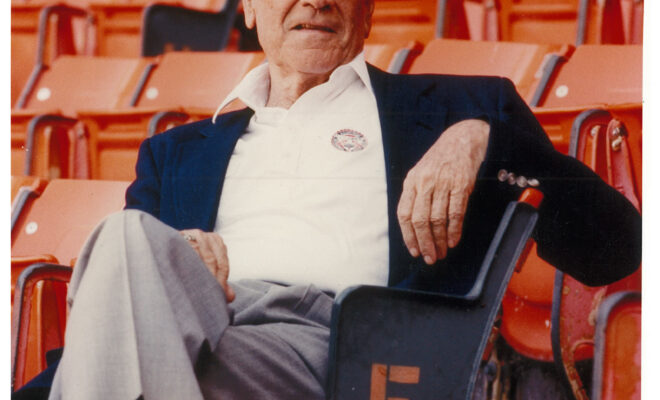
Pinch arrived at the SCGA in 1965 as a young executive from Iowa, taking the title of executive manager before being elevated to executive director a year later. Over the next three decades, he would build the Association into what many considered the nation’s premier regional golf association, not by following the playbook, but by occasionally rewriting it.
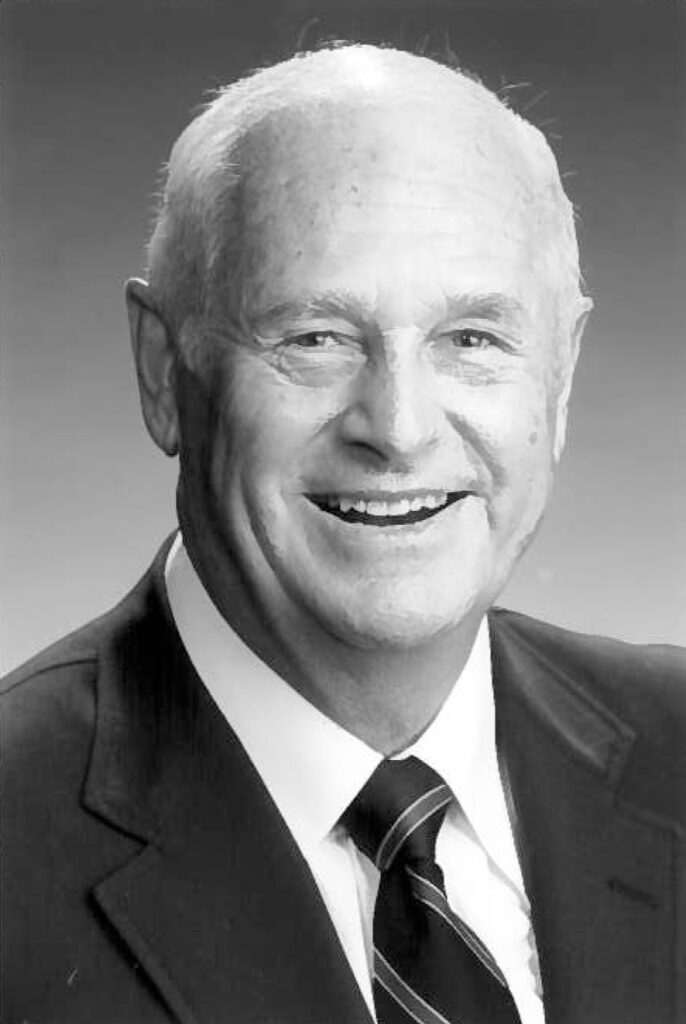
“Newell was an ambitious guy,” recalled Kevin Heaney, who would later succeed him as SCGA executive director. “He did things that a lot of the ‘tried and true’ golf associations were nervous about.”
Computer handicapping. Expanded board representation. A satellite offi ce in San Diego. Pinch was always thinking about what the game could be, not just what it had always been. And by the late 1970s, what it had always been was starting to feel limiting.
The SCGA’s membership structure required golfers to belong to a club attached to a golf facility (what the industry calls a “green grass” club). But across Southern California, a growing number of golfers existed entirely outside that structure. Some played munis but couldn’t get into the men’s club. Some played with coworkers, or friends from church, or groups bound together by culture or background who had no institutional home. They kept their own informal scores, and without an authorized Handicap Index®, they played in what Heaney described as the “Wild West” of unsanctioned and unverified handicapping.
Pinch recognized that these golfers — who were organizing on their own — needed the resources that could only come from an open door at the SCGA. But before Pinch could open that door, he needed the blessing of golf’s governing body. The USGA would have to sign-off on an entirely new category of membership, clubs without a home course. The concept didn’t exist anywhere in organized amateur golf. He made his case: more golfers playing the game, with legitimate handicaps, under proper oversight. Eventually the USGA agreed. More people playing was better for golf, full stop.
With that approval secured, Pinch turned to the harder political task of getting his own board on board. The SCGA board at the time was drawn predominantly from private clubs, the very institutions that had defined golf membership in Southern California for decades.
Some were wary of the old order being disturbed. Pinch, Heaney said, was “savvy and politically adept.” He knew he couldn’t simply mandate change. He had to bring his overseers along.
The solution, as it turned out, came from the last place anyone expected.
The Jonathan Club is one of Los Angeles’s most storied private institutions, a downtown social club whose golf membership included names from The LACC, Bel-Air CC, The Riviera CC, Wilshire CC and Lakeside GC. In 1979, it was, by current standards, a product of its era, precisely the kind of institution the SCGA board would find comfortable.
But the Jonathan Club had a problem of its own. Its golf membership included a pipeline of young, aspiring players who wanted to eventually join one of the elite clubs in town, but until they were formally admitted, they had no Handicap Index. And without an Index, they couldn’t compete in club events.
Pinch saw the overlap and the need, and he had a solution. And critically, these were exactly the kinds of golfers, from exactly the kinds of clubs, who could make his board agreeable to a revolutionary idea.
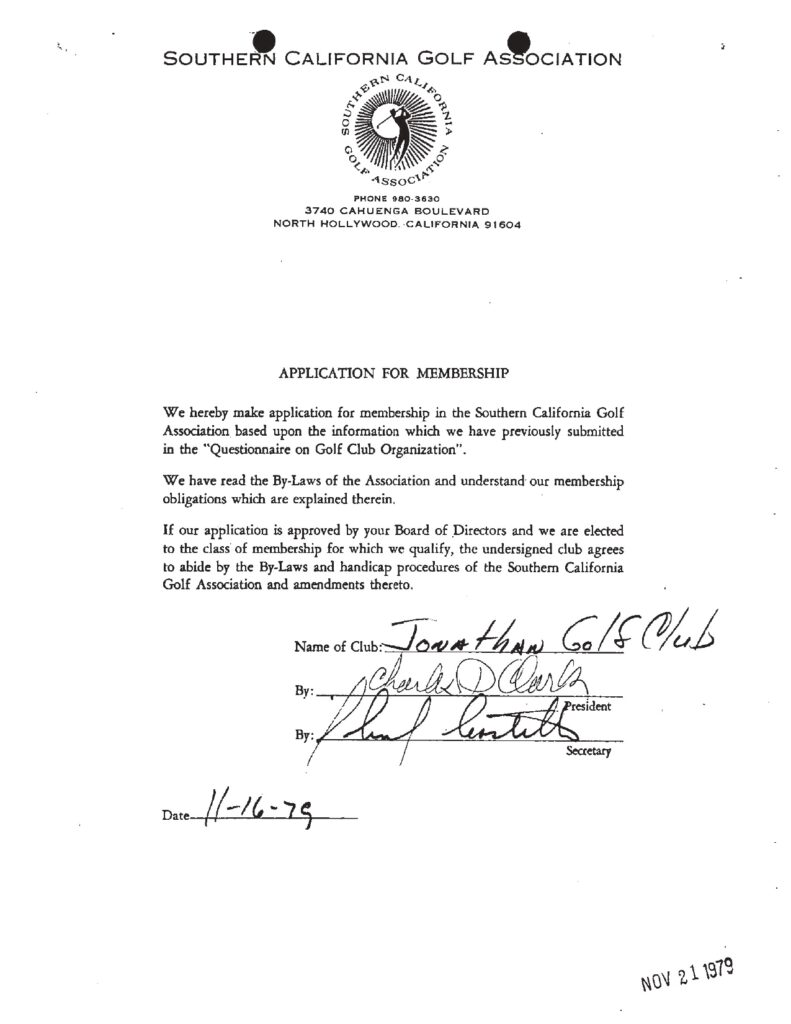
Pinch knew he just needed the first one and, in 1979, the Jonathan Golf Club became the first non-green-grass affiliate club in SCGA history.
Shortly after, a group of Walt Disney Co. employees formed their own affiliate club. Then others followed: workplace groups, cultural associations, friends who had been playing together for years finally had a formal home despite not being tied to a golf course. The cascade Pinch had envisioned was underway.
Not everyone wanted these new members treated as equals. Some influential voices pushed for a “membership-lite” structure, bringing affiliate clubs in at a lesser tier. Pinch refused. He insisted they be full SCGA members in every meaningful sense, with access to tournaments, handicap services — the full suite. The only carveout was Team Play, which required a home course.
There was also an unexpected benefit. Because affiliate clubs were smaller and more tightly knit, they often maintained handicaps with greater care. The intimacy of a group who knew each other, played regularly and were accountable to one another turned out to be an asset. “People feel comfortable playing with their groups,” Heaney said. “And that is why these have been so popular.”
Kevin Heaney joined the SCGA in 1984 and served as executive director from 2006 to 2023, overseeing an era of extraordinary growth. Today the SCGA has more than 1,500 member clubs and 223,000 individual members. More than half of those clubs are affiliates — smaller, tighter and more personal by design, which is exactly what Pinch envisioned nearly half a century ago.
Northern California adopted the model early, but most other associations around the country have not, in part because green-grass clubs competing for members don’t always welcome an alternative pathway. “Golf doesn’t always embrace new and bold ideas right away,” Heaney said.
The revenue generated by the affiliate program has helped build programs that now define the SCGA’s broader mission, from the Junior Golf Foundation to expanded women’s golf initiatives to clubs that would have been unimaginable in 1979.
The Tropicana Golf Club, for example, was founded in 2019 by Jimmy Ruiz out of his barbershop in Glendora. What started as a place to get a haircut and recruit a Saturday foursome has grown into a 700-plus member club with chapters in Los Angeles, Las Vegas and Florida. Firefighters have affiliate clubs. So does the Elks Club. The Latina Golfers Association uses golf as a business platform to connect with clients and influencers.
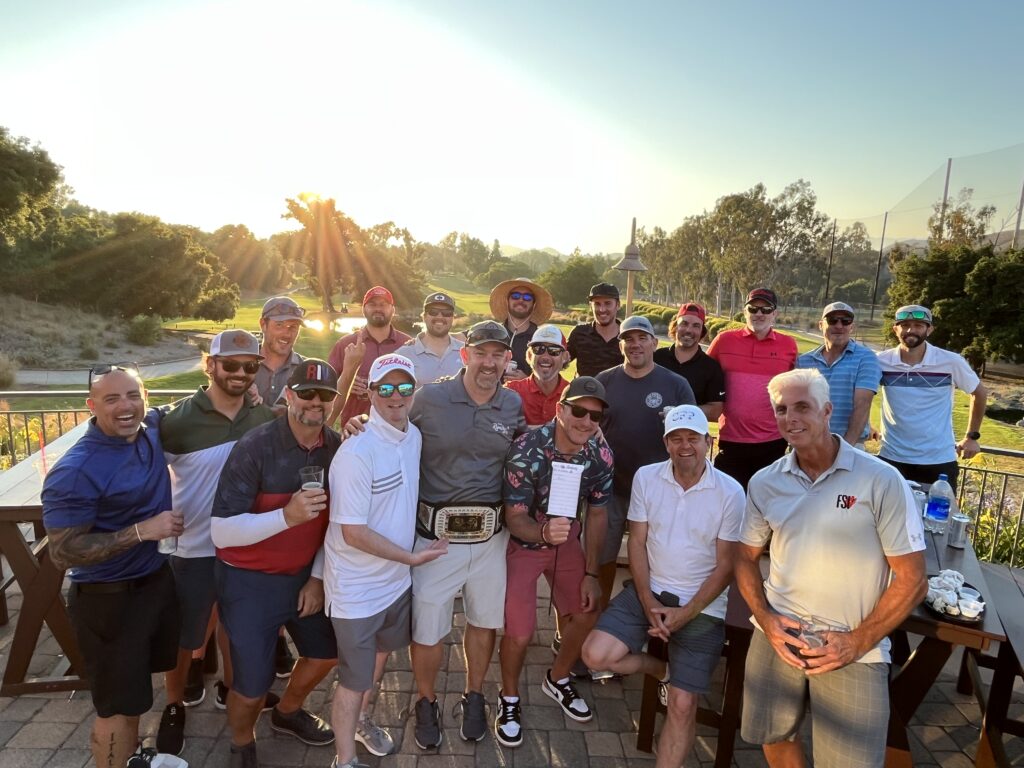
These aren’t just golf clubs. They’re communities that happen to play golf, and every one of them traces back to a door Pinch opened in 1979.
Scott Hofman is the current president of the Jonathan Golf Club, the same club that became the first affiliate in SCGA history. He came to the role the way most affiliate members find their way in — through a shared love of the game and a group of people who made golf feel accessible.
“We’re a group of guys with deep roots in this city’s great clubs,” Hofman said. “Learning that our little corner of the Jonathan Club quietly helped open the game to hundreds of thousands of people, that’s not something any of us takes lightly.”
Newell Pinch is gone now, but his legacy is embedded in an institution he spent a lifetime building. The SCGA honors him annually with the Newell Pinch Delegate of the Year Award, a f itting recognition for a man who spent his career making sure the game had room for more people in it.
In 1979, if you loved golf but had nowhere to belong, you were on your own. Pinch changed that, quietly, strategically and permanently, starting with a single application from a club in downtown Los Angeles.