The Bright Side of Darkness: Jeremy Poincenot May Have Lost His Vision, But Not His Hope
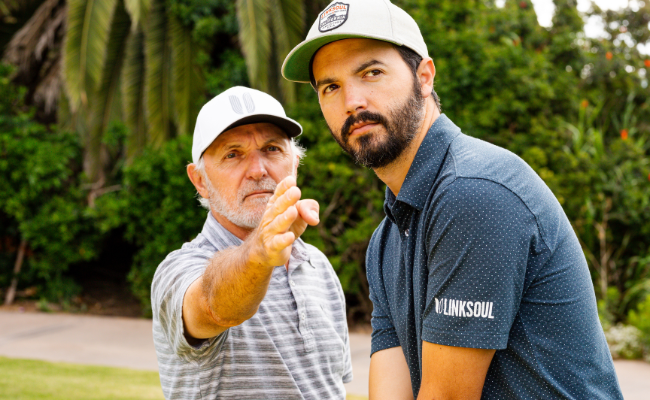
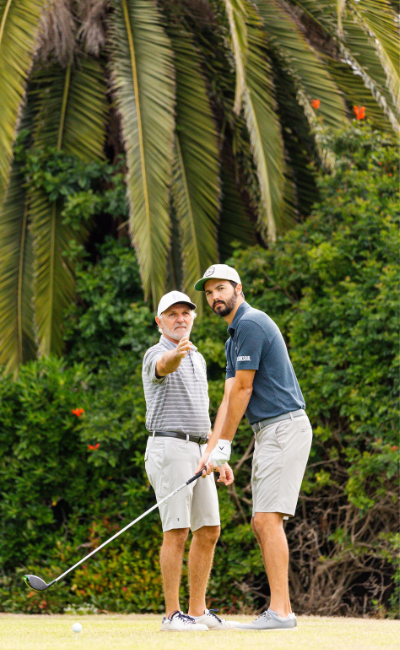
Jeremy Poincenot loved playing golf as a kid. He was immersed in the game, as his parents worked in the golf equipment business. “All I wanted to do was go play with my dad,” recalls the 33-year-old Carlsbad resident. “I wanted to be a part of what he was doing. So I learned by getting lessons and chipping and putting.” Eventually he worked his way onto his high school varsity golf team.
But at age 19, darkness set in. Literally. Poincenot started losing his vision. The San Diego State University sophomore was diagnosed with Leber’s hereditary optic neuropathy, which is a very rare genetic disorder that causes sudden loss of central vision and affects roughly 1 in 50,000 people. Most of those affected are 18-to-25-year old men. Over a two-month span, he became legally blind and, understandably, fell into a state of depression. That lasted several years.
His mother Lissa desperately wanted to help. In her quest to find some way to comfort her son, she discovered golf tournaments for the blind. “She thought it was going to make me happy again, make me whole again,” Jeremy recalls. “She saw there were world championships and told me I could compete in these one day, and she was right. At first, I was against the idea and didn’t want to embarrass myself. I hated slow play when I was fully sighted and thought blind golf was probably the epitome of slow play. I didn’t want to do it. But I finally decided to go to the range.”
As he started swinging, some shots felt pure. As he continued hitting better shots more frequently, his confidence and enjoyment began emerging. Soon, he decided to go play a course, with his father Lionel serving as his guide. He shot 99 the first time out. He expected to score better, as he was used to shooting in the 70s when he was sighted. But he continued to practice and play — ultimately lowering his Handicap Index to 9.8.
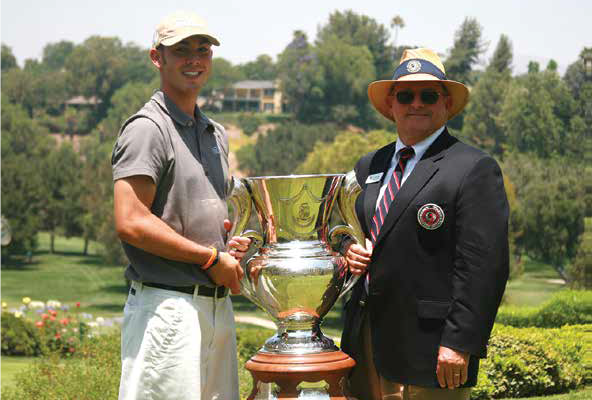
“Just getting out there playing and being in golf tournaments has given me so much fulfillment and joy,” says Poincenot, who CNN has called the world’s best blind golfer. With his dad at his side, he’s captured three World Championships and nine National Championships.
He’s quick to point out that the contestants are somewhere between completely blind to legally blind with some degree of sight. Poincenot’s somewhere in the middle, able to make out some objects in his visual periphery. “At every tournament around the world or country, we play and afterwards drink a beer, eat dinner and have a great time,” he says. “And if you just hung out at any of the tournaments, you’d never hear a single person complain about their lack of sight. They’ve gone through challenging times but have gotten off the couch and are pursuing their passion again. There are some phenomenal blind players around the world, and I’ve gotten to play some amazing places with my dad through blind golf.”
Fundraising for a Cure
What are the biggest physical challenges he faces on the course as a blind golfer? “Finesse shots,” he says. “When I was fully sighted, any shot inside 100 yards I’d pull my 58-degree wedge and kind of eyeball the pin and hit the shot. Now I can’t see the flag from off the green. So, anything inside 100 yards, I need to know if the pin is front, middle or back — and then dial in a swing for that yardage without being able to see the flag. When I was sighted, I’d want to land up beyond a bunker and have it trickle out from there. Now it’s all numbers based, more than eyesight Hitting a drive or a full iron is no different. In fact, I think it’s actually a little easier. On the greens, I pace off all my putts and walk the yardage from ball to hole. I feel that in my feet and have someone there with their eyes telling me what they see.”
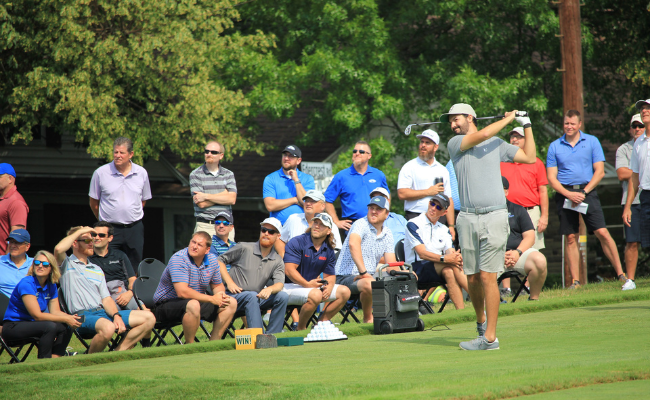
Now an inspirational speaker, the father of two aims to provide blind people with a fresh perspective, to empower their interdependence personally and professionally by realizing that asking for help is actually a strength and not a weakness. His advice to those considering taking up golf? “Do it, 100 percent,” says Poincenot, who is a member at Morgan Run Club & Resort in Rancho Santa Fe, where he often plays. “Don’t think of reasons not to do it. Just jump in.”
Poincenot also fundraises for a Leber’s cure. After he went blind, Poincenot says, “I lived every day wanting to one day see again. Now I could care less. I’m perfectly happy in my situation. It’s my new normal, but I fundraise so that they find a treatment or cure, so others don’t have to go through that experience of losing their sight and the challenging emotional and psychological impact that comes with it. I hate that others go through it. It’s not a fun experience.”