PGA WEST Debuts The Performance Lab — and it’s OPEN TO ALL
The new indoor training facility helps golfers fine-tune their swings with the latest technology.
Walking into the Tournament Clubhouse at PGA WEST, in La Quinta, Calif., it’s impossible not to feel the resort’s connection with golf history. The lobby doubles as a museum, with memorabilia displayed behind glass and a floor-to-ceiling mural of historic PGA WEST moments, including Lee Trevino’s hole-in-one during the 1987 Skins Game and David Duval’s 59 in the final round of the 1999 Bob Hope Classic.
It would have been easy for this institution to rest on its laurels. Instead, this past November, it added The Performance Lab to elevate the guest experience. It’s one of the most technologically advanced teaching facilities in Southern California and, best of all, it’s open to the public through the resort’s Golf Academy.
“Even though we have great instruction, great golf courses, great practice facilities and great weather, this was a missing piece of the puzzle,” said PGA WEST Director of Instruction Bryan Lebedevitch. “This keeps us relevant in the tech conversation.”
TECH TOOLS
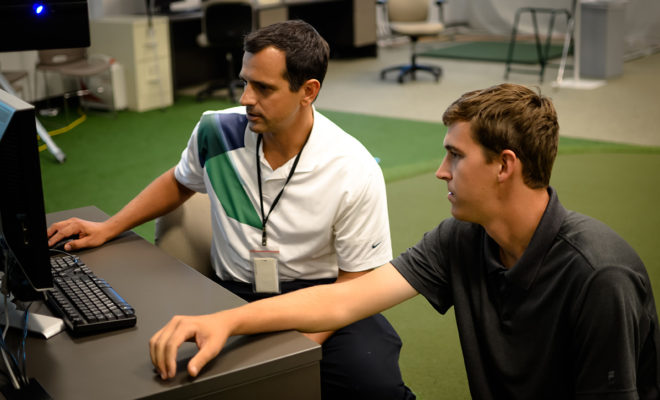
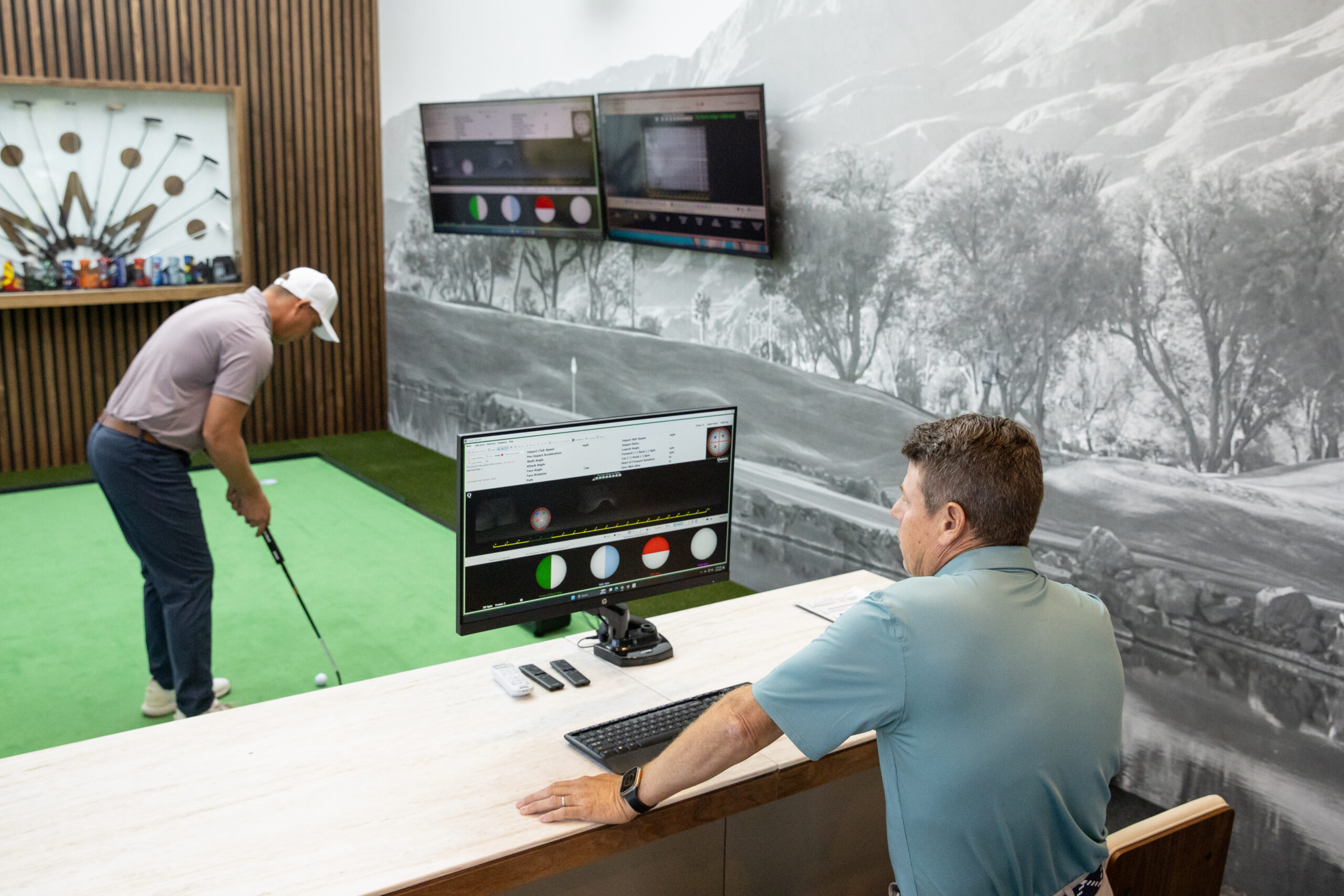
At just over 1,800 square feet, The Performance Lab is loaded with golf technology. The putting area features a Zen Green Stage that can tilt or twist to simulate real-world green undulations. The Quintic Ball Roll system measures data such as ball speed, decay speed and how much a ball is skidding, rather than rolling, off the putter face.
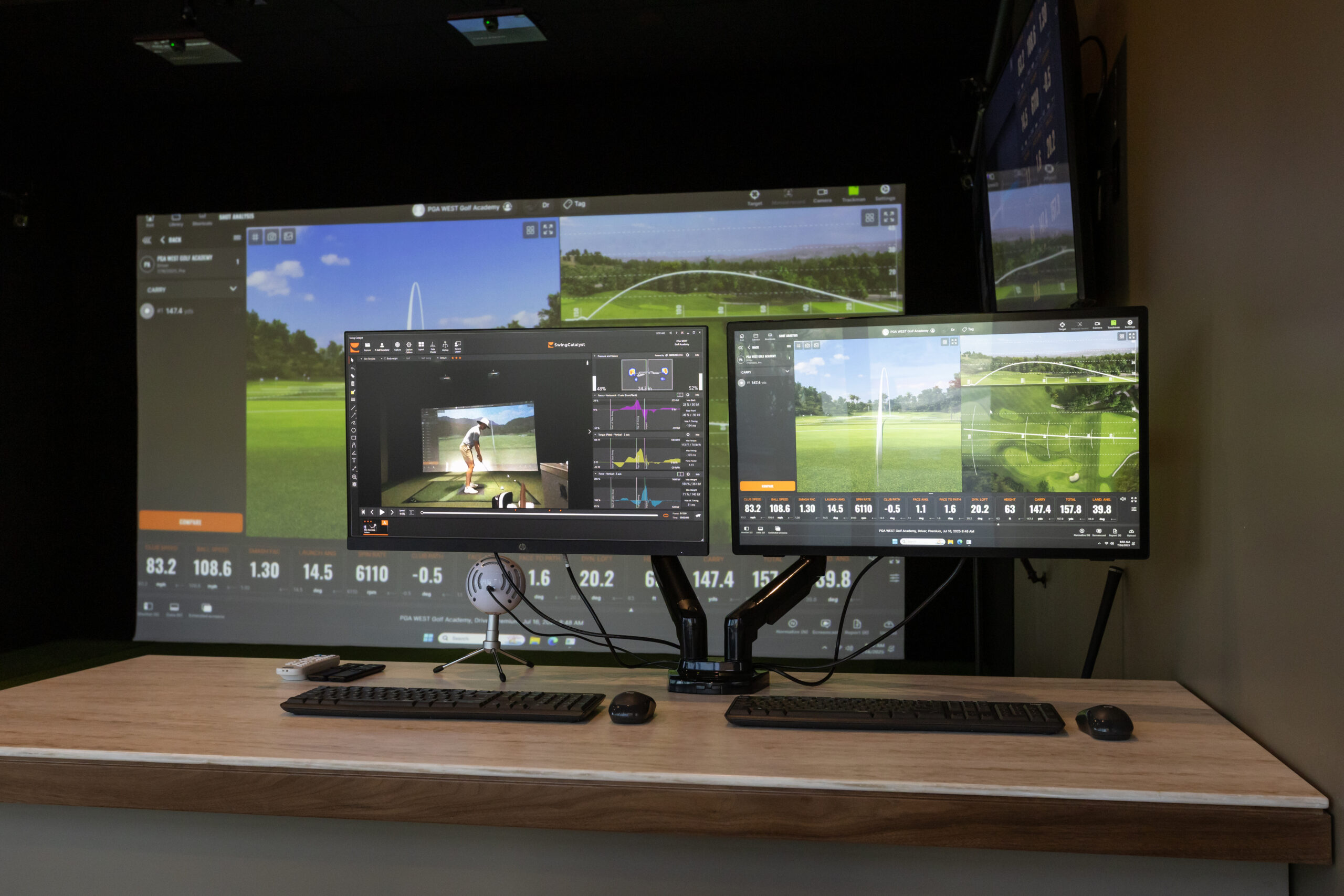
The two hitting bays look like your typical golf simulator, but there’s more than meets the eye. There’s a ceiling-mounted Trackman, a Zen Swing Stage with Swing Catalyst that can measure ground force or tilt the floor to practice uneven lies and a Golf Evaluation and Research System (GEARS) that uses 3D motion capture to give a detailed view of a golfer’s swing. In a game where being off by the smallest of degrees can affect a golfer’s game, The Performance Lab has the tools to measure everything.
In fact, The Performance Lab can gather so much data that Lebedevitch and the other coaches have to consider what information to shield from their students, who range from professionals to casual players. A newer golfer would undoubtedly be overwhelmed by everything the lab can provide, so the coaching staff has had their own learning curve with implementing the tools.
“One of the dangers of a lot of tech is student overload,” Lebedevitch cautioned. “If I want to show one data point, I can, but it’s measuring 40. You have to understand what’s relevant. It’s a guided tour.”
PROUDLY PUBLIC
An old adage goes, “When you have more than you need, build a longer table, not a higher fence.”
It’s an idea that speaks to inclusion and hospitality in the wake of abundance, and it seems to be the driving philosophy behind PGA WEST, which offers five resort courses. Now, The Performance Lab adds to the resort’s legacy of accessibility.
“When you have the property that we have here, you cannot help but want to share this with everyone in the golf community,” said Ben Dobbs, PGA WEST executive director. “We have created a healthy balance between private club membership and resort play, allowing more golfers to enjoy what makes PGA WEST so special.”
“One of the dangers of a lot of tech is student overload. You have to understand what’s relevant. It’s a guided tour.” –Bryan Lebedevitch
Perhaps that’s part of the reason their tournament, The American Express, is held in January, a month when golfers elsewhere endure a true winter season. Instead of laying low, PGA WEST opens its doors and welcomes fans who can thaw out in the Southern California desert while watching world-class competition.
Lebedevitch’s coaching philosophy also reflects this generous spirit. With more than 25 years of experience, he is considered one of the best golf instructors in America, with several touring professionals as students. However, he still makes time to work with everyday players. After decades of instruction, he finds joy in working with anyone who’s willing to get better.
“The best part about teaching is when you get people who are interested in improving and who care about what they’re doing,” he said. “It doesn’t really matter what level they’re at. It’s just a shared passion for the game.”