Beyond Sustainability

Parker Anderson has set up apiaries at Goat Hill Park and Valley Club of Montecito
Parker Anderson and Greener Golf are redefining golf course sustainability in a language that is music to the ears of course managers.
How does a club-swinging beekeeper and self-described “bit of a tree hugger” intend to help lead golf “beyond sustainability?” With data.
But to understand that, we need to understand what Parker Anderson, principal at Greener Golf in Santa Barbara, means by “beyond sustainability.” Yes, he believes in saving water, turf reduction, native plants, solar energy, etc. But to Anderson, sustainability must also incorporate a broad, inclusive approach to local ecosystems — not only the course and its facilities and the surrounding nature, but — very importantly — human beings.
“Our species is facing global crises,” Anderson says. “Crises caused by our disconnection from nature and our disconnection from one another.” Gulp. But then Anderson serves up the good news: “Golf is an engine that can regenerate those connections.”
That golf helps us connect with one another is not, of course, news to those who play the game. But in Anderson’s view, there’s more to bringing people together than the opportunity to play in your club’s annual Texas Scramble or a Friday afternoon best-ball with your bros. Anderson wants golf courses to also include the broader, non-golfing community.
Golf courses can be places where people can come to learn about nature, “to bring their kids out to learn about bees and flowers,” Anderson says. “We can learn life skills through golf. A lot of clubs do a really good job with that, but I think there’s more we can do to use golf courses as community hubs.
“Often golf courses are just four fences, and you have to go through security to get in. But if we surveyed the people who live alongside them, many would express a value for having that green space near them.”
For Anderson, that suggests PR cachet, but it also illustrates how golf is part of an ecological web that includes the humans who play golf, the humans who live near golf and the native landscape that surrounds golf. “Beyond sustainability is a concept where we are not only just hanging on, but we are regenerating these ecosystems, regenerating our connection with nature and rebuilding connections among each other.”
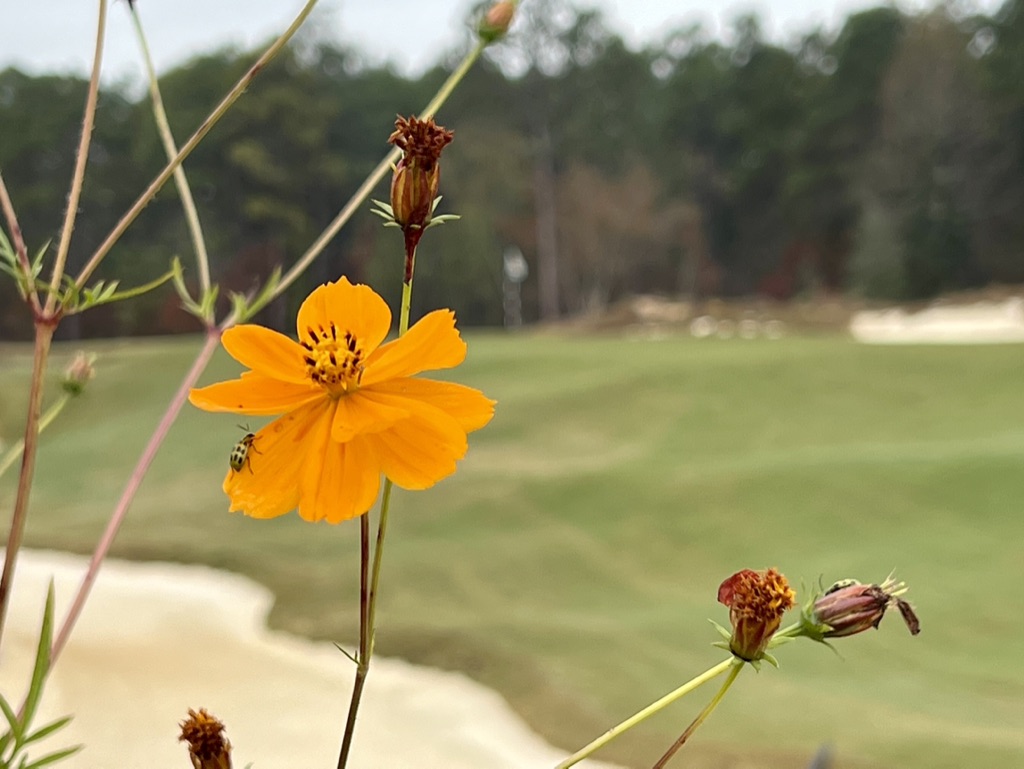
THE CASE FOR DATA
If that sounds idealistic, rest assured that Anderson grounds his approach in terms that course managers keenly appreciate. In traditional sustainability, a golf course might reduce some turf acreage and calculate the savings in dollars. “And that’s great,” Anderson says. “A very simple calculation. But there are a variety of other impacts of that turf reduction. Like are you converting that turf into native wildflowers, or is it hardpan or pavement? Does that actually provide a benefit to the ecosystem? If you have eliminated turfgrass areas, what can you do to increase that positive benefit? Without accurate data, it’s very difficult to say whether a sustainability effort is successful.”
Measuring all of that would give golf courses a full picture of the value of sustainability, to the satisfaction of bean counters and tree huggers alike. Hence Anderson’s Greener Golf Index, a “holistic assessment that allows us to actually tell a story based on data rather than speculation and guesswork.”
For example, Anderson applied the Greener Golf Index to create a “journey map” that guided the University of Michigan’s Radrick Farms GC through a three-year sustainability effort. Among the many data points that contributed was a heat map that showed exact traffic patterns on the course. Using that data, management could prioritize areas that most come into play, cut back on resource use in little-used areas, and deal with delays and bottlenecks.
The University of Michigan is Anderson’s graduate alma mater, where he studied landscape architecture and earned a Master of Science in sustainable systems, with a focus on golf and the environment. The Santa Barbara native went on to become a club pro at Thunderbird CC in Rancho Mirage for five years and played three years on the Dakotas Tour before angling over to a career in golf course design and architecture.
Anderson’s primary affiliation is with Tom Doak and Renaissance Golf Design. He helped guide the work at Sedge Valley, the fifth course at Sand Valley Resort in Wisconsin, which he describes as “an ecological restoration with a golf course as the facilitator.” His current focus is working with Doak and Renaissance on the new Punta Brava Golf and Surf Club near Ensenada, where he is having native chaparral preserved for replanting after the shaping is complete.
To illustrate the importance of that process, Anderson likes to quote Alister MacKenzie: “The success of a golf course is to imitate the beauties of nature so closely as to make the work indistinguishable from nature itself.”
WHAT ABOUT THE BEES?
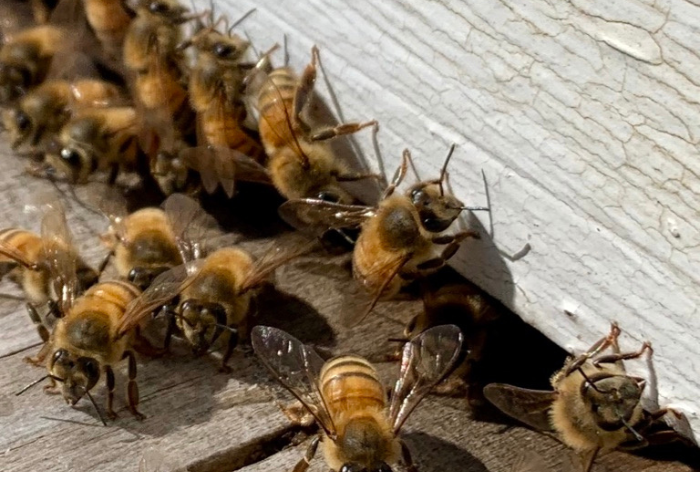
Anderson picked up the art of beekeeping after taking a course at Santa Barbara City College and apprenticing with the Beeman of Santa Barbara, Paul Cronshaw. It began as a hobby, but Anderson soon realized that bees could have a place on golf courses. “Bees are struggling. Everyone wants to help them. So, they’re supportive of beekeeping programs at golf courses.”
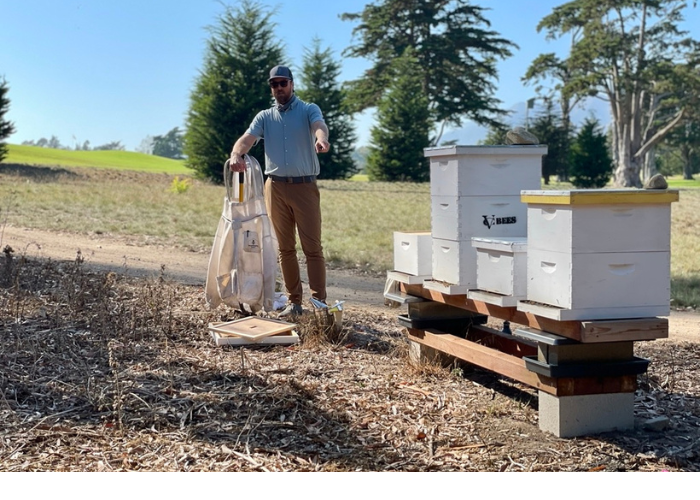
Anderson has set up apiaries at Goat Hill Park GC in Oceanside and Valley Club of Montecito, among others. To what effect? “To support the bees, you’re going to want to grow some wildflowers, so maybe they’re going to take some turf out of play and plant wildflowers. Now you’ve reduced your water use because you have less turf. And you’re supporting the habitat because you have wildflowers.” Goat Hill has, in fact, devoted several acres to pollinator-friendly native flower meadows.
There’s a safety factor, too. An on-course apiary keeps bees away from unwanted locations such as irrigation boxes — and away from golfers. Finally, adds Anderson, the bees “produce a wonderful gift from a mutually beneficial interspecies collaboration.” Translation: honey.