Watch the Birdie: Paying Attention To The Winged Beauty Around You May Not Improve Your Game, But It Can Certainly Enhance The Experience Of Golf.
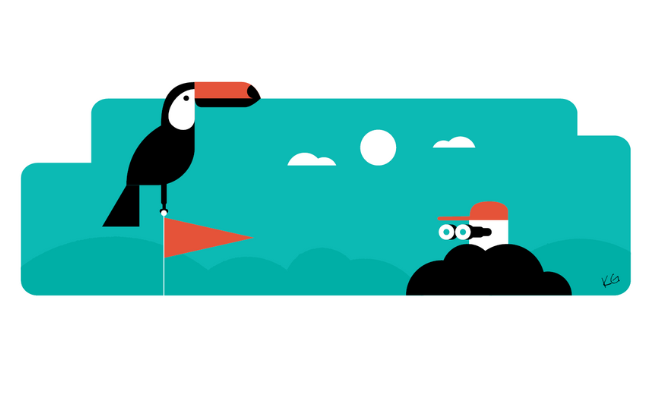
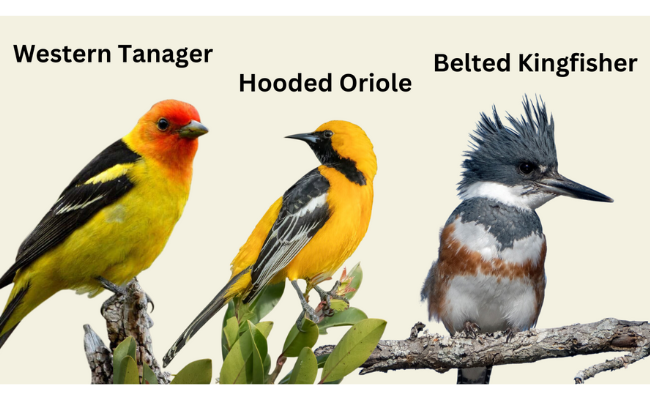
“WAIT! HOLD YOUR SWING! There’s a western tanager over there,” said no one ever. Far be it from me to disrupt your flow. But maybe … just maybe … you might enjoy your game a smidgen more by noticing and even admiring that western tanager. It’s a beautiful bird. Golfers are known as aesthetes, appreciators of the beauty of the game and of the courses they play. Why not include the birds that populate those courses?
Believe me, beautiful birds surround you every time you play.
“Golf courses are some of the last remaining open spaces in heavily populated Southern California,” says Kurt Leuschner, professor of natural resources at College of the Desert in Palm Desert. “In places where habitats are being altered and fragmented, golf courses serve as sanctuaries for birds and wildlife.”
Leuschner leads bird walks on courses in the desert region and has published a handy foldout guide called Field Guide to Wildlife of the Southern California Desert Region, which includes photos and descriptions of birds commonly sighted on desert courses.
Bird Is The Word
So, Kurt, what might we see in the course of a round? “Water-loving birds for sure,” he says. And he’s not just talking those perennial favorites (heh), American coots and Canada geese. “We see wood ducks, buffleheads, hooded mergansers.” (All stunners.) “Herons and egrets. And we’re seeing more and more white pelicans. The great thing about water birds is that they don’t move much.”
Keep your eyes peeled for less static action, too. While your mates square up, scan for a belted kingfisher darting across the pond, a roadrunner beep-beeping in the fairway. That flash of color? Could be a vermilion flycatcher, a gorgeous bird. “Vermilions are more common than ever,” Kurt says. “They’re expanding their range, and I think golf courses are a big part of that.”
Avid golfer Scott Thomsen started birding during the pandemic, and half-kiddingly claims it has improved his game. “The birding element has made things significantly more interesting,” says Thomsen, who enjoys merging his twin passions on LA-area muni courses such as Rancho Park GC and Wilson & Harding GC.
“Golf courses have some of the best birding habitat in SoCal,” he says. “So much unbroken green space. I have a field day every time I’m out.”
Like any birder, Thomsen enjoys spotting colorful birds and rare species. “Hooded orioles are some of my favorites on LA courses. I always stoke on woodpeckers. Sometimes rare birds come through, like a tropical kingbird I saw at Wilson, and a neotropic cormorant I saw through my rangefinder at Big Canyon CC in Newport Beach. That was a lifer for me.”
Big Canyon is near Newport’s Upper Bay, a protected natural area that is a rich haven for birds. Rancho San Joaquin GC in Irvine is near both the Upper Bay and the San Joaquin Marsh Wildlife Sanctuary, making it a great course for birds and birders.
Retired golfer/birder David Swigers lives adjacent to the course, where he has spearheaded efforts to increase the population of western bluebirds. Swigers works with local Boy Scouts to build nesting boxes for the beautiful little birds, which they place on and near the golf course. Volunteers report a weekly bluebird census to the Cornell Laboratory of Ornithology.
“Most people associate bluebirds with happiness,” says Swigers. Golfers too? “Well, I guess you’ll get a split vote on whether they’re interested in birds. I wish there were more awareness.”
There Are Always Bluebirds
Two species most golfers (and greenkeepers) are aware of are Canada geese and American coots, famous for, uh, littering neatly groomed turf. “I’m not their chief defender,” says Scott Thomsen, “but if we run into goose droppings, I just say, cool, move your ball and laugh about it.”
Thomsen is good-natured and realistic about getting golf friends and family interested in birds. “I’ll rattle off various names to people who don’t really care. ‘There’s a belted kingfisher!’ But I do like to think I’m surrounded by moderately curious people, and some of them are catching on.
Like a text I got recently: ‘Dude, played Costa Mesa and saw a hawk take down a squirrel. A million flycatchers.’ He didn’t even tell me what he shot.”
As for improving his game, Thomsen makes a quiet case: “Golf is such a mental game. If you’re studying a pond for a duck you haven’t seen this year, then you’re not thinking so much about that next shot. It’s calming. It opens your eyes.”
One convert Thomsen has won over is his wife, Micala. “She’s an amazing golfer. A better golfer, but worse birder than me. But I’ll be stepping up to hit and she’ll say, “Scott, Scott — vermilion right behind you!”
Ultimately, birds are both a salve for the confounding of golf and a complement to the experience. “Birds are more consistent than golf,” says Thomsen. “Even if my swing is off in a different dimension, there are the bluebirds.”